
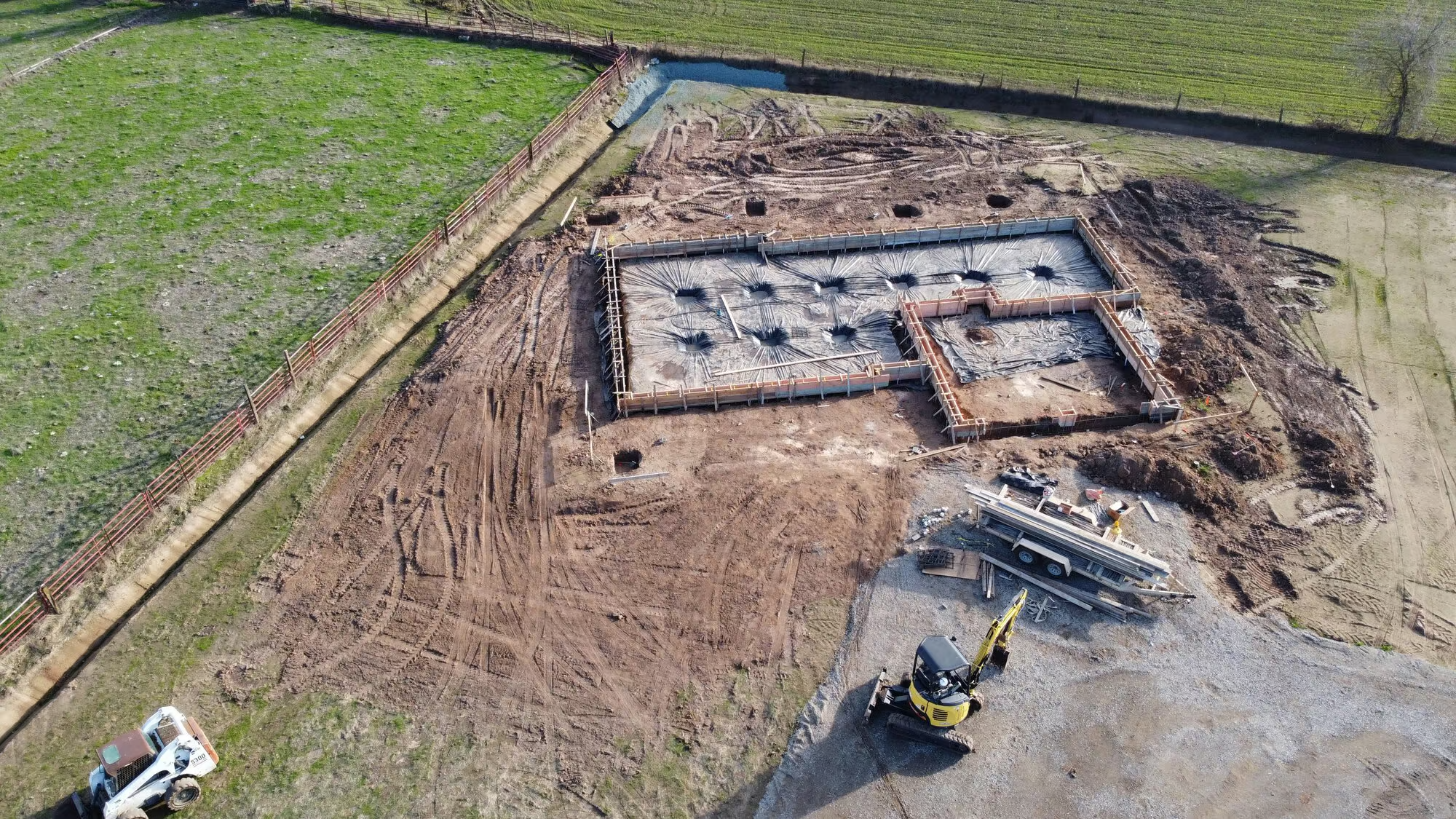
What a pre-pour foundation inspection checks before concrete covers it
A foundation pre-pour inspection in Brownwood gives you a chance to ask questions while the work is still in plain sight. Once the concrete goes in, you can't look at the steel, forms, and lines beneath it the same way. That's the point of this inspection: identify visible concerns while the builder can still see what you're asking about.
Think of the foundation as more than a flat patch of concrete. Its shape, the beams below the slab, and the steel inside it all serve a purpose. What an inspector can assess depends on the foundation design and how much of the work is visible. Plans are useful because a detail that looks odd on its own may be exactly what the design calls for, while a missing detail may be easy to overlook without them.
- Forms and layout: Are the edges, openings, and visible beam areas set up in a way that matches the available plans? This is about spotting apparent differences, not surveying the lot.
- Reinforcement: Where steel bars or cables are part of the design, are they present, supported, and positioned as shown? Steel resting where it shouldn't can raise a question worth settling before it's buried.
- Items that pass through the foundation: Plumbing lines, sleeves, and other visible penetrations need to be considered alongside the concrete and reinforcement around them. Their placement matters because they won't be easy to view after the pour.
- Prepared surfaces and coverings: Depending on the design, visible ground preparation, plastic sheeting, and other specified materials may also be worth checking for gaps or damage.
An inspection isn't a substitute for an engineer's design or the builder's responsibility to follow it. It also can't tell you what's happening below soil that isn't exposed. If a question turns on a structural calculation or an unseen condition, that calls for the right design professional, not a guess made from the edge of the forms.
What you should get from this stage is a clearer conversation. Instead of asking, "Does the foundation look okay?" you can ask about a particular beam, line, or piece of reinforcement while everyone can still point to it. That's much more useful than trying to reconstruct what was there after the concrete covers it.
Why Central Texas clay soil makes this inspection point non-negotiable
If your Brownwood lot has clay-rich soil, moisture matters. Clay can swell as it gets wet and shrink as it dries. That movement can put stress on a foundation over time. It doesn't mean a crack is certain, and it doesn't mean every lot in Brownwood has the same soil. It does mean the foundation needs to be built for the conditions and the design chosen for that site.
That's why the time before concrete goes in matters. A pre-pour inspection can't tell you how the soil will behave years from now. It can give you a chance to ask whether the visible work lines up with the plans before the work is covered. If something appears different, you can bring a specific concern to the builder while the relevant part is still there to see. After the pour, that conversation gets harder because neither of you can simply look at it.
Say the builder tells you the foundation was designed with the soil in mind. That's a useful answer, but it leaves a fair question: which plans are the crew building from? If the builder has a soil report or an engineer's foundation plan, ask for those documents so the visible work can be discussed against the actual design. The shape of a beam or the placement of reinforcement may look unusual to someone standing at the edge of the lot. It might be right. Without the plans, no one should call it wrong just because it looks different, or call it right because it's almost time to pour.
There's also a limit worth keeping clear. Looking at the prepared foundation isn't the same as testing the soil, checking an engineer's calculations, or confirming that everything below the exposed surface is sound. If the concern is whether the design suits the soil, that's a question for the design professional. The inspection's value is narrower and practical: it helps you identify visible questions before concrete takes away the easiest chance to answer them.
You don't need to become an expert in clay to make use of that chance. You need to know what plans apply to your house, what part of the work is still visible, and who can answer a question if the two don't seem to match. On a lot with moving soil, getting that answer before the pour is far more useful than being told later that the work underneath the slab can't be seen.
An independent inspection is not the same as the builder's or the city's
If the builder says the foundation has been checked, that's worth asking about. The useful follow-up is: checked by whom, and for what? The builder is responsible for building to the plans and addressing questions about the work. An independent foundation pre-pour inspection gives you another set of eyes before the concrete hides it. It doesn't take that responsibility away from the builder.
A city inspection, if one is required for your project, serves a different purpose. It's part of the local approval process, not a personal review of every concern you might have about your house. You can ask the builder which inspections apply to your Brownwood project and whether they've been completed. Don't assume an independent inspection counts as city approval, or that city approval answers every question you might want to ask the builder.
Here's where the difference matters. Say you notice something in the prepared foundation that doesn't seem to match the plan you've been given. The builder may have a good reason for it, including a revised plan you haven't seen. An independent inspector can help you put a clear question to the builder while the work is still visible. The builder can then show the applicable plan or explain who authorized the change. That's a more useful conversation than trying to sort out the difference after the pour.
Independence doesn't mean an inspector gets the last word on the design. The engineer or other design professional is the right person to answer whether a structural change works as intended. Nor does an inspector direct the crew or approve the pour. The value is in helping you recognize a visible concern and get it to the person who can resolve it before the chance to look is gone.
You can keep the roles straight by asking three plain questions: What plans is the builder using? What inspections or approvals apply to this job? If an independent inspector raises a concern, who will answer it before the pour? You don't need three people making the same decision. You need to know which person is responsible for each one.
At Morgan Inspection Services, Mike Morgan is a home inspector with TREC license #6231. He was also appointed to the Texas Real Estate Commission's Inspector Advisory Committee in 2019. Those credentials can help you choose whom to ask for an independent look. They don't turn a pre-pour inspection into an engineering review or a city sign-off. It's a way to make your questions more specific while there's still something to see.
Thinking about a foundation pre-pour inspection in Brownwood? Let's talk.
Call (325) 510-3305 · report within 24 hours
When you don't need a pre-pour inspection
You don't need a pre-pour inspection if the concrete has already been poured. The work this inspection is meant to look at is no longer visible. If you're worried about something the builder did before the pour, ask for the plans, any photos taken during construction, and the records for inspections that applied to the job. Those may help you put a specific question to the builder. They won't let anyone inspect what was covered as though it's still in the open.
You also don't need to schedule one while the lot is still being cleared or dug. There's too little of the prepared foundation to look at. Wait until the work that's meant to be checked is in place, but leave room in the schedule for questions before the pour. If you aren't sure when that will be, ask the builder what work will be finished on the day you have in mind and when concrete is scheduled.
Sometimes the better move is to pause, not inspect. If the foundation plan is being revised, an inspection against the old plan may leave you with questions that the new one answers. Ask for the current plan and the builder's updated schedule first. The same goes if the builder hasn't settled which plan the crew is using. You need a clear point of reference before a visible difference can mean much.
If your only question is whether the foundation design suits your particular soil, a pre-pour inspection won't answer it. Ask the engineer or other design professional responsible for that design. On a Brownwood lot where soil movement is a concern, it's reasonable to want that answer. But looking at work before concrete covers it can't replace a review of the soil information and design.
You may not need another set of eyes if a professional you've already hired is scheduled to review this same stage and the scope covers the questions you have. Check what that review includes and who will receive its findings. Likewise, if you're only trying to learn whether a required approval has been completed, ask the builder or the authority handling that approval. An independent inspection doesn't supply that answer.
The deciding question is simple: is there prepared foundation work you want someone to look at before it's covered? If not, don't book an inspection just because the pour is on the calendar. Get the plan, timing, or design answer you need first.
Scheduling around a pour date that can move on short notice
You don't need to wait for a firm pour date to start planning. Ask your builder when the foundation is expected to be ready for a look, then find out how much notice they'll give you before concrete arrives. Those may be two different answers. A date on the calendar helps, but what matters most is having a window when the work is ready and still uncovered.
Tell the builder you'd like an independent inspection at that stage. Ask who can confirm site access and who'll let you know if the schedule changes. If you're buying a home that's being built, don't assume the sales contact and the person managing the pour have the same information. Get the name of the person who can tell you when the site will be ready.
Before you request an appointment, gather the details that make the timing clear:
- The site address and the builder's current estimate for the pour.
- When the builder expects the foundation work to be ready for inspection.
- Who can authorize access and how that person can be reached.
- Whether you can get the current foundation plan to the inspector ahead of time.
If the builder moves the pour, pass along the new timing as soon as you hear it. Don't rely on an old appointment time if the work won't be ready then. The opposite problem matters too: if the pour moves earlier, check whether there's still a workable inspection window rather than assuming the original plan holds. It's worth asking the builder directly, "What's the latest I'll know if this date changes?"
Leave time between the inspection and the pour for the builder to answer a question if one comes up. That doesn't mean every question will require a change. It means you don't want the first chance to discuss a visible concern to be when the concrete truck is waiting. Ask the builder how concerns can be passed to the right person before work proceeds.
If concrete goes in before an inspection can happen, don't describe a later visit as a pre-pour inspection. Let us know what happened and ask the builder for the construction records that exist. The useful window for this service has closed, and it's better to be clear about that than to book it under the wrong name.