
Deciding if your property needs a well system inspection
A well system inspection in Brownwood is worth considering when a property depends on a private well and you need to make a decision about it. Water coming out of a faucet tells you something, but it doesn't tell you everything about the well system. The first question is simple: where does the property's water come from?
That distinction matters most when you're buying. A listing may mention a well, but you still need to know whether it supplies the house, serves only outdoor taps, or isn't used at all. Those are different situations. If the well supplies the house, its condition affects daily life. If it serves only irrigation, you can decide how much that use matters to you. Don't assume a well is the home's main water source just because it's there.
A shared well deserves a closer look at the arrangement, too. An inspection concerns the system's condition. It doesn't settle who owns the equipment, who pays for repairs, or what access you have to it. If those answers aren't clear, ask for the property's records and any written agreement. You'll make a more informed decision if you understand both the equipment and your responsibility for it.
For a property you already own, the question is a little different. Maybe the water pressure has changed, or the well hasn't been used while the property sat empty. Those observations don't tell you the cause. They do give you a reason to learn more about the system rather than guessing at a repair. When you call, describe what you've noticed and ask whether an inspection is the right starting point for that concern.
Keep water quality separate from equipment condition. An inspection of the well system shouldn't be taken as proof that the water is safe to drink, unless the service you arrange specifically includes water testing. Likewise, a water test alone won't explain the condition of the pump or other system parts. Ask what's included so you know what question the service will answer, and what you'll still need to check.
If you're unsure whether a Brownwood property has a private well, start with the seller's information or the records you have for the property. Confirm the water source before arranging an inspection. That small step can save you from booking a service the property doesn't need, or overlooking a well you'll depend on.
What gets checked during a well system inspection
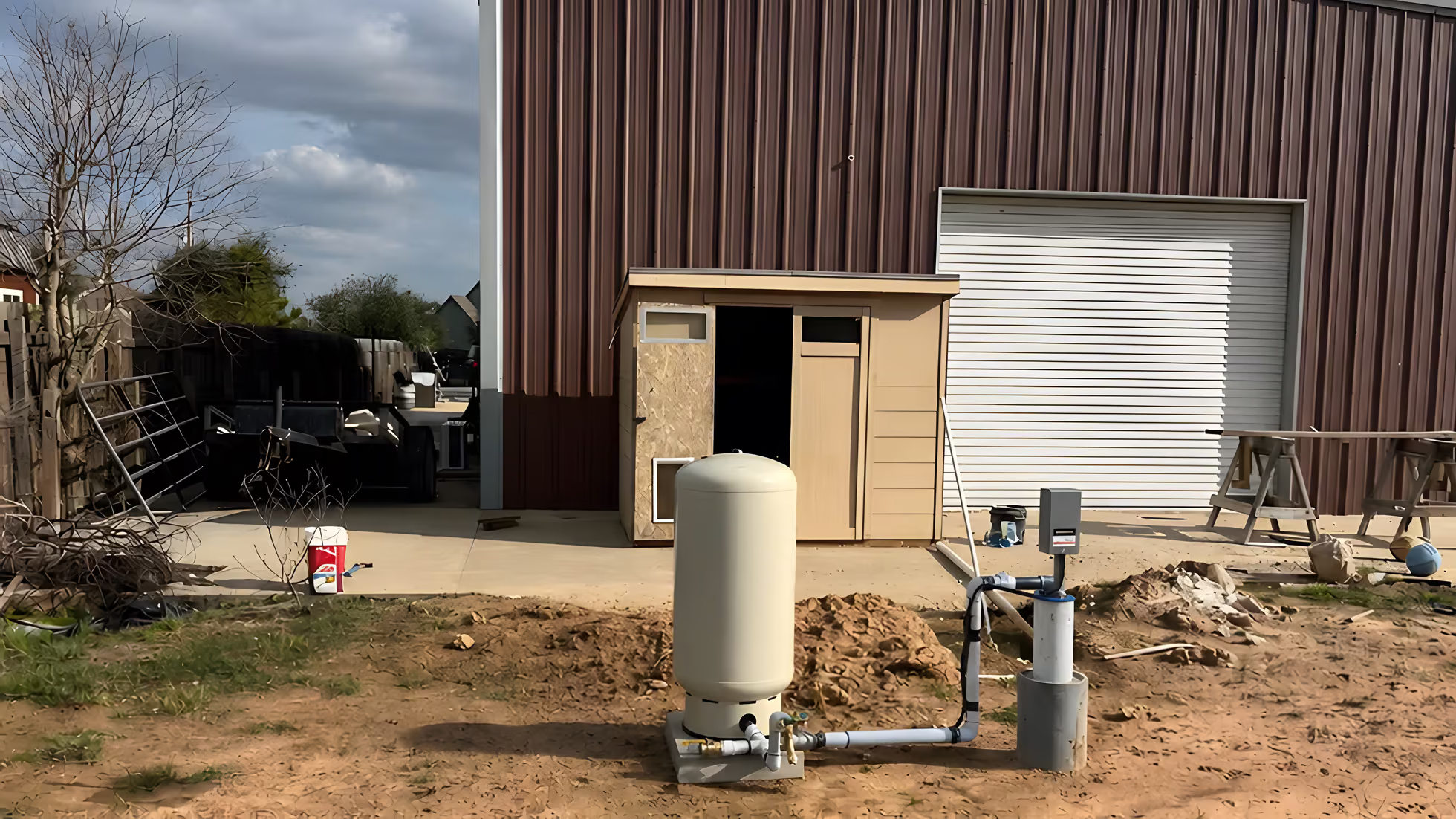
A well system is more than the hole in the ground. Water has to move from the well, through the pump and pressure equipment, and into the house. A useful inspection looks at the parts that can be reached and checks how the system behaves when water runs. The point is to tell you what can be observed, not to guess about parts no one can see.
- Wellhead: The visible casing and cap can be checked for damage, loose parts, or openings. The surrounding ground matters, too. If the wellhead is buried or hard to reach, that limits what can be seen.
- Pump and controls: An inspector can note whether the pump starts and stops as water is used and look at accessible controls for visible problems. A pump down inside the well can't be judged by sight from the surface.
- Pressure tank and gauge: These parts help keep water pressure steady. The gauge and the way the system cycles can offer clues when pressure rises, falls, or changes more often than expected.
- Visible piping and connections: Exposed lines can be checked for leaks or damage. Buried piping and pipes inside walls are different. Their condition can't be judged just by looking at what's exposed.
- Water delivery: Running fixtures can show whether water reaches the property and how pressure behaves during that check. It doesn't prove the well will keep up with every future demand.
One clue rarely gives you the whole answer. A drop in pressure could involve the pump, tank, controls, piping, or the well's supply. That's why it helps to look at the parts together rather than treat a single gauge reading as a diagnosis. If a problem points to equipment that can't be reached during an inspection, you'd need further evaluation to pin down the cause.
Before you arrange the service, ask what checks are included and whether the wellhead, pressure tank, and controls will be accessible. If you have records showing the well's depth, pump details, or past work, have them ready. Those records can fill in some history, but they can't replace a look at the system's present condition.
The most helpful result is a clear line between what was checked and what remains unknown. A system may deliver water during an inspection without revealing the condition of every buried or submerged part. Knowing that limit gives you a better basis for deciding whether you need a closer look before you rely on the well.
Well system inspection is not a water quality test
If your question is, "Can I drink this water?" a well system inspection alone can't answer it. That takes water testing. An inspection and a test look at different things. Even a well that delivers clear water can leave you with an unanswered water quality question.
A water test looks for the substances included in that test, in a sample taken at a particular time and place. The test might check for bacteria, certain chemicals, or both, depending on what's ordered. "The water was tested" isn't quite enough information to rely on. You need to know what was tested for, where the sample came from, and when it was collected. A result from an outdoor tap, for example, may not answer the same question you have about water at the kitchen sink.
The reverse matters, too. A water test doesn't tell you why pressure drops when two faucets run, whether the pump is cycling as it should, or what condition visible equipment is in. A test result can answer a question about that sample without explaining how the system delivers water to the house. If you're buying a property with a private well, you may need answers to both questions. Don't treat one service as a stand-in for the other.
Before you agree to water testing, ask what the test includes and how you'll receive the results. If someone has already tested the water, ask for the actual report rather than a verbal assurance that it passed. Look at the date, the sample location, and the list of substances checked. That lets you see what the report answers and what it doesn't. A test limited to one substance can't rule out others it didn't measure.
For an inspection, keep the question just as clear. You want to understand the well system's observable condition and its limits, not receive an implied promise about the water. If drinking water quality is part of your decision, ask separately about appropriate testing and whether results will be ready when you need them. It's easier to make a sound choice when each result answers the question it was meant to answer.
Thinking about a water well inspection in Brownwood? Let's talk.
Call (325) 510-3305 · report within 24 hours
Why a licensed home inspector handles this differently than a plumber
A home inspector and a plumber can look at the same loss of pressure and answer different questions. If you're buying a Brownwood property, you may need to understand the well system's observable condition before you decide what to do next. If you need someone to find the cause of a fault and fix it, you're looking for a repair specialist. The useful question isn't which one is better. It's what answer you need right now.
Say a seller tells you the pressure drops when the shower and kitchen sink run together. An inspection can help you understand what can be observed about the system and where the limits of that check are. It shouldn't turn a symptom into a firm diagnosis of a part that hasn't been examined. A repair specialist can investigate a suspected fault more closely and tell you what work it needs. Depending on where the trouble lies, that may mean a plumber or someone who works on well and pump equipment.
That difference matters when you're deciding whether to buy. A repair quote for one problem may tell you how much that problem could take to fix, but it doesn't necessarily answer your broader question about the system you're taking on. An inspection can give you a wider view of what was observable, but it isn't a substitute for a repair diagnosis when something isn't working. The point is to learn what you can from an inspection before you make a property decision, then bring in the right specialist for anything it can't settle.
Mike Morgan is a home inspector, TREC #6231, with a degree in chemical engineering. He was appointed to the Texas Real Estate Commission's Inspector Advisory Committee in 2019. Those are reasons to know who's behind your inspection, not reasons to assume an inspection can answer every question about a well. A clear account of what could and couldn't be determined is more useful than certainty no one has earned.
Before you hire anyone, tell them the decision you're trying to make. If you're under contract, ask whether you need an assessment of the system, an investigation of a specific fault, or both. You can also ask what their work won't cover and whether a concern they find would call for another specialist. That way, you won't mistake a repair estimate for a full inspection or expect an inspection to come with a repair plan.
Signs your well system needs attention now
You know how the water normally behaves in your house. If that changes, pay attention to the pattern, not just the worst moment. One weak shower could leave you guessing. Pressure that keeps dropping during ordinary use, or water that stops and returns, gives you a clearer reason to ask about the well system. You don't have to know which part is at fault before you make that call.
- Pressure changes at more than one fixture. Note whether it happens every time or only when water is running elsewhere in the house.
- Water stops during normal use, then comes back. Write down how long it lasted and whether anyone was using another tap at the time.
- You hear equipment starting and stopping often, or you hear it when no one seems to be using water. Note where you hear it rather than guessing what made the sound.
- You notice new dampness around visible well equipment or a change in the wellhead's visible condition. Note exactly where and when you first saw it.
Those details matter because a symptom can be easy to misread. If pressure drops when two taps run, that tells you what happened in the house. It doesn't tell you whether the trouble is at the pump, the pressure equipment, or somewhere else. If you can describe when the change began and what was happening at the time, you can ask a more useful question than, "Is the well bad?"
It also helps to separate a change from a long-standing quirk. Ask anyone familiar with the property whether the water has always behaved this way. If you're buying, request any records of past well or pump work and note what you've seen yourself. A seller's memory may provide context, but it can't tell you what caused a change today. Keep your own observations specific: which fixture, how many were running, and whether the problem repeated.
If the property has no water at all, your immediate question is how to restore it, not just how to document its condition. A well system inspection can help with a property decision, but it isn't a promise to find and fix a failed part. Tell the person you contact whether you're dealing with a working system that has changed or a system that isn't delivering water. That distinction helps you ask for the right kind of help.