
Deciding whether a sewer scope belongs in your home purchase
We get asked this a lot, and we'd rather give you a straight answer than a sales pitch. A standard home inspection runs water through the sinks, tubs, and toilets and checks the drain pipes you can see. It can't see the pipe buried under the yard. That pipe belongs to you once you close, and fixing it can be one of the bigger repair bills a homeowner faces. So the real question is how likely that hidden pipe is to have a problem.
Here's when we'd lean strongly toward adding a scope:
- The house is several decades old. Older lines were often made of clay, cast iron, or other materials that crack, rust, or separate at the joints as they age.
- There are large trees between the house and the street. Roots go looking for water, and a small crack in a sewer line is an open invitation.
- The house has been sitting empty. A line nobody has used in months can hide a blockage or a sag that only shows up once a family moves in.
- You notice drains that empty slowly, toilets that gurgle, a sewer smell in the yard, or one strip of grass that's greener than the rest.
- You see signs of past sewer work, like a newer cleanout pipe or a patched trench line across the yard. That doesn't mean it was done wrong, but it's worth seeing what was done.
Now the other side. If the house is new construction and the line was just installed, the odds of a serious problem are lower. A scope can still catch debris left from the build or a low spot in the pipe, but we wouldn't call it urgent. If the home is on a septic system, the short pipe to the tank is only part of the picture. The tank and drain field are the bigger concern, and our septic system inspection covers those.
Sometimes a seller hands over a scope video from a past sale or a recent repair. That can save you a step, but watch it yourself. Check the date, make sure it's this property, and see whether it shows the full run of pipe out toward the street. A short clip that stops a few feet past the house doesn't tell you much.
Timing matters more than people expect. In most Texas home purchases, your option period is the window where you can ask for repairs, renegotiate, or walk away. Once it closes, a cracked or root-filled line becomes your problem. That's why we suggest booking the scope alongside your pre-purchase home inspection, so both reports land while you still have room to act.
If you're still on the fence, think about it this way. Having it checked is a small cost next to digging up a yard. If the line comes back clean, you close with one less thing to worry about. If it doesn't, you'll know while you can still do something about it.
Choosing who should run the camera
Plumbers and home inspectors both run sewer cameras. Either one can do a good job. The question that matters is what the person running the camera gets out of what they find.
A plumbing company that scopes your line may also be the one that gets paid to repair it. Most plumbers are honest, and many give fair calls. But you're about to make a big money decision, and it helps to have the report come from someone who doesn't make more when the news is bad. Repairs aren't on our list of services. When we tell you a line has a root intrusion or a sag, we're not quoting you a fix in the same breath. You can take the findings to any plumber you like and get bids.
There are times when a plumber really is the better call, and we'd tell you so. If you already own the house and sewage is backing up into a tub, you need someone who can clear the line today, not write a report. The same goes if a past scope already showed a broken pipe and you just need repair pricing. A plumber can scope, clear, and fix in one trip. A scope during your option period is a different job. You're gathering facts to decide whether to buy, ask for repairs, or renegotiate.
Whoever you hire, these questions are worth asking before the camera goes in:
- How far will the camera go? You want the full run out toward the street, not just the first stretch past the foundation.
- Will I get the video itself, or only a written summary?
- Will problems be marked by distance from the access point, so a plumber can find them without guessing?
- Where will you get into the line, and is there a usable cleanout?
- When will I have the results, and will that be inside my option period?
- Do you also do sewer repairs?
That last question isn't a trap. It just tells you how to weigh what you hear.
Mike Morgan holds TREC license #6231. He founded the business in Brownwood in 2002 and has inspected homes ever since. Before that he earned a chemical engineering degree from Texas Tech and spent five years as an officer on two Navy submarines. In 2019 he was one of six inspectors in Texas picked for the Texas Real Estate Commission's Inspector Advisory Committee, which helps write the rules and educational materials for inspectors across the state. It was a privilege, and it taught him a lot about how a report should read. He's a curious person by nature. We'd rather walk you through what a pipe is doing and why than hand you a list of defects you don't understand.
If you're already setting up a home inspection in Brownwood, the scope fits right alongside it, so both sets of findings reach you while you still have time to act.
What happens during a sewer line scope
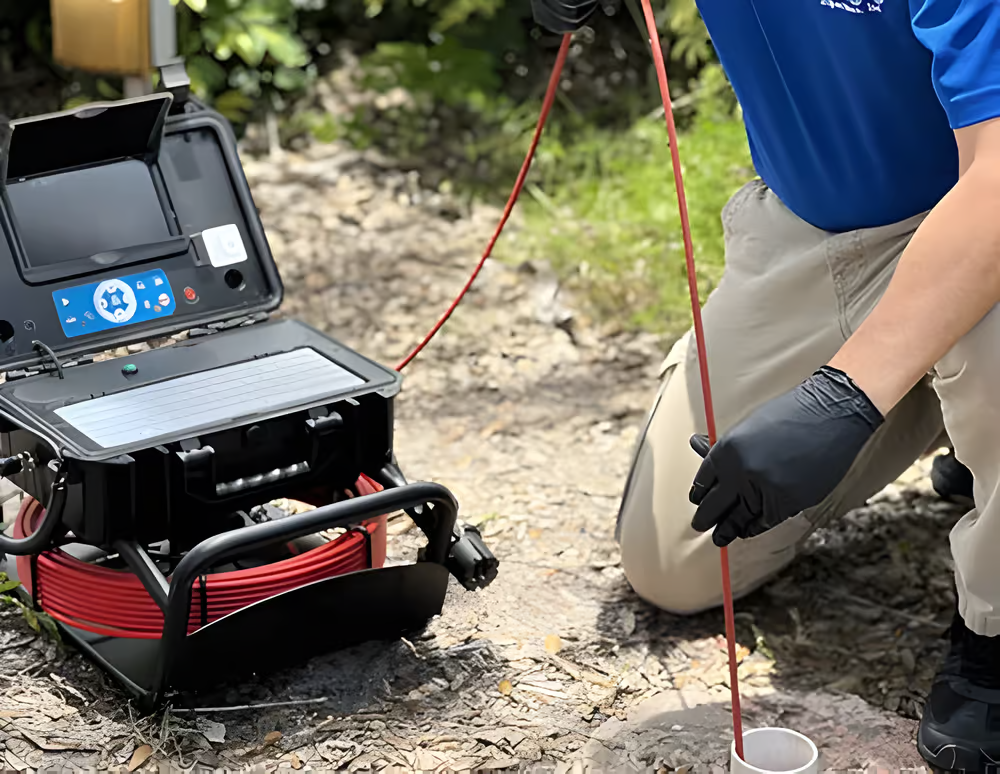
A sewer scope is simpler than most people picture. Nobody digs anything up. A small waterproof camera with a light sits on the end of a long, flexible cable. That cable gets pushed down the drain line from the house toward the street. A monitor shows the inside of the pipe live, and a counter on the cable tracks how many feet the camera has traveled.
The first step is getting into the line. The easiest way in is a cleanout, which is a short capped pipe sticking out of the ground near the house. Some older homes don't have one, or it's buried under a flowerbed. When that happens, the usual options are going in through a roof vent or pulling a toilet. Each of those can limit how much of the line the camera reaches, so it helps to know ahead of time whether the house has a cleanout you can find.
Water also matters. Running water through the line during the scope shows how it drains. Water that pools and sits in one spot usually points to a low place in the pipe. For that to work, the water has to be on at the house. That's worth confirming with the seller's agent if the home has been sitting empty.
Here's what a camera can show you as it moves down the pipe:
- Roots coming through joints or cracks, from fine hairs to thick mats that block most of the pipe
- Cracks, broken sections, or a pipe that has partly collapsed
- Offset joints, where two pieces of pipe have shifted and no longer line up
- A belly or sag, where part of the line has dropped and holds water and waste
- Grease, scale, or debris that slows the flow
- Changes in pipe material, which often tell you part of the line was repaired or replaced at some point
Each problem gets tied to a distance on the counter. That number is what makes the video useful later. If a plumber knows the roots are about 40 feet out, they can find that spot and price the fix without guessing.
It's just as important to know what a scope can't do. The camera sees the inside of the pipe and nothing else. It can't tell you whether the soil around the pipe is wet, and it can't promise the line won't clog next year. If there's a hard blockage, the camera may not get past it, and the rest of the line stays unseen until it's cleared. Standing water can also hide the bottom of the pipe, where cracks sometimes are. A clear video is good news, but it's a snapshot of that day, not a forecast.
There's also the question of where your pipe ends. Somewhere toward the street, your private line connects to the city's main. The part on your side is generally yours to maintain, while the city's main is not. A scope that reaches near that connection gives you the most complete picture of what you'd own.
On a typical house, the camera work itself doesn't take long. The real value comes afterward, when you sit down with the video and someone explains what you're looking at. A root you can see on a screen makes a lot more sense than a line in a report that says "root intrusion noted." We'd much rather you understand what that pipe is doing than just take our word for it.
Thinking about a sewer line scope in Brownwood? Let's talk.
Call (325) 510-3305 · report within 24 hours
Pairing a sewer scope with your full inspection
A sewer scope tells you about one pipe. A full home inspection tells you about the whole house. The value comes from reading the two side by side, because the clues inside the house and the video from under the yard often describe the same problem from two angles.
Here's a simple example. The home inspection notes that the back bathroom tub drains slowly and the toilet gurgles when the washer empties. On its own, that could be a clogged trap or a vent problem. Then the scope shows a sag about 30 feet out where water sits in the pipe. Now those two notes become one story, and you know where to send a plumber. Without the scope, you'd have a symptom and a guess. Without the inspection, you'd have a video and no idea how it affects living in the house.
It works the other way too. If the scope comes back clean but the house still has drain trouble, the problem is likely inside the walls or under the floor, not out in the yard. That's a cheaper conversation, and it's good to know before you start asking for repairs.
A few things to sort out ahead of time make both jobs go smoother:
- Ask your agent to confirm that the water, gas, and electricity will all be on. A house with utilities off can't be fully checked, inside or out.
- Ask the seller's agent if anyone knows where the cleanout is. If it's under a bush or behind a fence, it helps to know before inspection day.
- Try to get both done in the same window, so both reports reach you at about the same time.
- Plan to be there near the end if you can. Seeing the video and the house together makes the reports easier to follow later.
Once both reports are in hand, you can sort what you found by how much it matters. Safety items and big systems usually come first. A sewer line with roots or a broken section sits near the top of that list, because it can affect whether the house is livable. A slow sink in a guest bath does not. Having both reports at once lets you build one repair request, instead of going back to the seller twice before your option period runs out.
Depending on the property, there may be other things worth checking while you're at it. A house on a well can use a well system inspection. A yard with an irrigation system can have a sprinkler system inspection. Most buyers also want a termite inspection, which our licensed partner performs. You don't need all of them. Pick the ones that match the house you're buying.
Mike has always liked this part of the job best. It's when the pieces of a house start to make sense together, and you can see how the plumbing you use every day connects to the pipe you'll never see. The goal is for you to leave knowing what you're buying, not just holding a stack of paper.
Understanding how sewer scope pricing typically works
When you call around for a sewer scope, the quotes probably won't all match. That doesn't always mean someone is overcharging. It usually means each company is pricing a slightly different job. Once you know what goes into the number, it's a lot easier to compare.
There are two common ways it's priced. Some inspectors price the scope as an add-on to a home inspection, since they're already at the house and the trip is covered. Others price it as a stand-alone visit, which has to cover the drive and setup on its own. Some plumbing companies offer a low-cost or free camera check. That can be a fair deal, but keep in mind what we covered earlier about who gets paid for the repair. A cheap scope can be paid for later in the repair bid.
These are the things that tend to move the price up or down:
- How easy it is to get into the line. A clear cleanout near the house is the simple case. Going in through a roof vent or pulling a toilet takes more time and more care, and some providers charge extra for it.
- How long the line is. A house set far back from the street has more pipe to run, and more pipe takes longer to scope.
- Travel distance. A rural property well outside town can carry a trip charge, especially when the scope is booked on its own.
- Whether the line has to be cleared first. If the camera hits a hard blockage, someone has to clear it before the rest of the pipe can be seen. That's usually a plumber's job and a separate cost, and the scope may need a second visit afterward.
- What you get at the end. A written report with the video and the distance to each problem takes more time to put together than a quick verbal summary. It's also much more useful when you're asking for repairs.
That last point is worth thinking about. The cheapest quote isn't a bargain if all you get is a short clip and a thumbs-up or thumbs-down. You can't hand that to a seller or a plumber and expect much to come of it. When you compare prices, compare what's included, not just the total.
Before you book, ask whether the quote covers everything you're likely to need. Ask if there's an extra charge when there's no cleanout. Ask what happens if the camera can't get past a blockage, and whether a second visit costs more. A good provider will answer plainly. If you only find out about the extras on inspection day, that's not a great sign.
We'd also keep the cost in perspective. You're paying for information, and you're paying for it at the one point when it can still change your deal. A scope that turns up roots or a broken section gives you something real to take back to the seller. A clean result lets you stop wondering about a pipe you'll never see. Either way, the money is spent on a decision you were going to make anyway. It's better to make it knowing what's under the yard.