
Decide if your closing or loan requires a termite report
We get asked this a lot, and here's the honest answer. We can't tell you whether your closing needs a termite report. Two other things decide that: what your lender requires and what you signed in your sales contract. So before you book anything, it's worth a five-minute phone call to find out where you stand.
A termite report is more likely to be required in these situations:
- Your loan type or your lender calls for a wood-destroying insect report before they'll fund. Some government-backed loans and some lenders ask for one. Others don't.
- Your sales contract says one will be done. Sometimes the buyer asks for it, and sometimes the seller agrees to provide it.
- Something came up during the appraisal or another inspection, like damaged wood or mud tubes, and the lender wants it checked out before closing.
When you call your loan officer, ask these three questions. They'll save you a scramble later.
- Is a termite or wood-destroying insect report required for my loan?
- How recent does the report have to be at closing? These reports can go stale, so timing matters.
- Who's allowed to pay for it under my loan, the buyer or the seller?
Then look at your contract, or ask your agent to. If the report is listed there, it has to get done even if your lender doesn't care about it.
Now for the case where nobody requires it. Maybe you're paying cash, or your loan simply doesn't call for one. In that case you don't need a termite report to close, and we won't pretend otherwise. Plenty of people skip it and do just fine. It's your money and your call.
Here's how we'd think it through, though. The lender's rule is there to protect the lender's investment. It has nothing to do with whether termites are in the walls. Termites don't read loan paperwork. If you're buying an older house, or one with wood touching the soil, or a crawlspace you can't easily see into, it's worth knowing what's going on in that wood before you own it. If you find out after closing, the repair is all yours.
If you do decide to get one, schedule it early. The best time is during your option period, if your contract has one. That's the stretch where you can still negotiate or walk away. A lot of buyers set up the termite inspection at the same time as their pre-purchase home inspection. Our licensed partner performs the termite inspection, and we schedule it with your home inspection. That way you get both answers in the same window and aren't waiting on one report while the clock runs out on the other.
Know what a termite inspection covers
A termite inspection is a close look at the parts of a house where termites and other wood-destroying insects tend to show up. It covers what can be seen and reached on the day of the inspection. It isn't a look inside your walls. Once you understand that difference, the report makes a lot more sense.
Most termites in our part of Texas live in the soil. They come up into the house looking for wood to eat. So a good inspection spends a lot of time where the house meets the ground. That means the foundation edges, the crawlspace if there is one, the garage, and any wood that sits close to or touching dirt.
Here's what an inspector is generally looking for:
- Mud tubes. These are thin dirt tunnels about the width of a pencil. Termites build them to travel up a foundation without drying out.
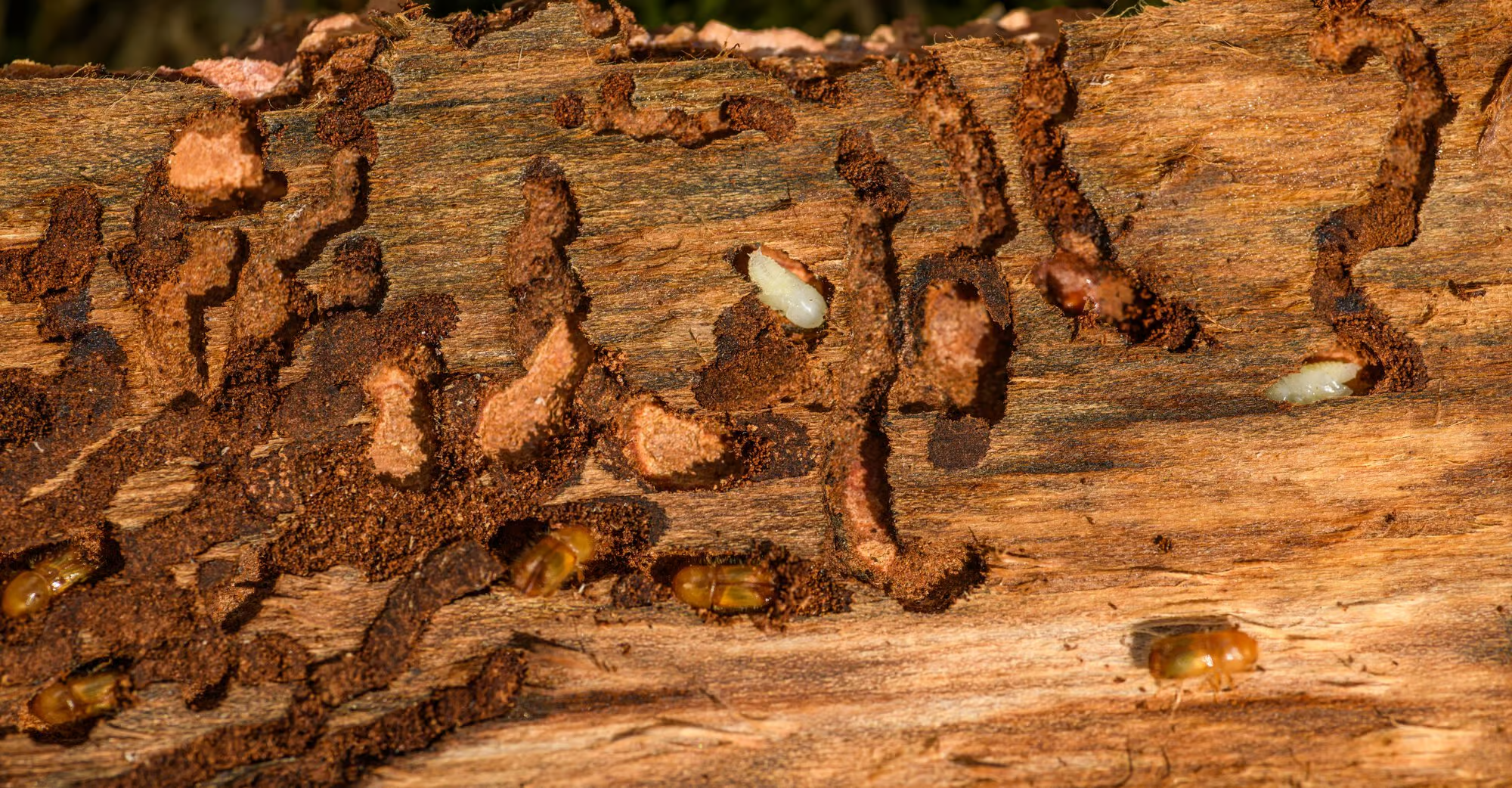
- Damaged wood. This can be wood that sounds hollow, feels soft, or has thin channels running along the grain.
- Discarded wings. Termites that swarm in spring drop their wings near windows, doors, and light fixtures.
- Signs of other wood-destroying insects, like carpenter ants or wood-boring beetles, which can do their own kind of damage.
- Signs that the house was treated before, such as drill holes in a slab or along a patio.
An inspection also notes conditions that invite termites in, even when no bugs are found. Common ones include wood siding or trim that touches the soil, firewood stacked against the house, mulch piled high against the foundation, and leaks or poor drainage that keep wood damp. Termites like moisture about as much as they like wood. Fixing these things is often cheap, and it's one of the most useful parts of the report.
Now for the limits, because we'd rather you hear them from us than be surprised later. An inspector can't see behind drywall, under carpet, beneath insulation, or behind a garage full of boxes. If termites are working inside a wall and haven't left a visible sign, a visual inspection won't catch them. A clean report means no evidence was found in the areas that could be seen. It doesn't promise that termites are absent. You can help by clearing a path to the crawlspace door, the attic hatch, and the garage walls before the visit.
The report itself tells you what was found, where it was found, and whether it looks active or old. It isn't a treatment plan or a repair bid. If something turns up, a pest control company handles the treatment, and a contractor handles any damaged wood.
A termite inspection is narrower than a full home inspection, which looks at the roof, plumbing, electrical, foundation, and the rest of the house's systems. The two work well side by side. The home inspection may spot a moisture problem, and the termite inspection tells you whether anything has moved in because of it.
Spot the warning signs before you call
Most people don't call about termites because they read about them. They call because something in the house looks off. The mud tubes and hollow wood described above are the clear signs. Termites usually leave quieter clues first, and they're easy to brush off as a house just getting older.
Here's a common one. It's a warm spring afternoon, often after a rain, and you see a cloud of small winged bugs at a window or around a light. Within an hour or two, they're gone and there's a little pile of wings on the sill. That's worth paying attention to. A swarm inside the house means a colony may be close by, maybe in the walls or under the floor.
Other clues you might notice around the house:
- Paint that bubbles, peels, or looks water-damaged when there's no leak nearby. Termites can work just under the surface and trap moisture behind the paint.
- Doors or windows that suddenly start sticking. Damp, damaged wood around a frame can swell or shift.
- Baseboards or trim that crumble or dent when you press on them with a thumb.
- Floors that feel soft, sag, or look slightly wavy, especially near outside walls.
- Tiny pinholes in drywall, sometimes with a bit of dirt around them.
- Small piles of hard, grain-sized pellets below wood trim or furniture. Some kinds of termites push these out of the wood they're eating.
People mix up flying ants and termites all the time, and we don't blame them. They look alike at a glance. A termite has a thick, straight waist, straight antennas, and two pairs of wings about the same length. A flying ant has a pinched waist like an hourglass, bent antennas, and front wings that are longer than the back ones. If you can catch one and set it in a clear bag, that helps. We'll admit it's not anybody's favorite afternoon project.
Some things aren't a reason to worry. One stray bug out in the yard doesn't mean much. Fine cracks along the grain of old porch boards are often just weathering. A door that sticks only during humid weeks may just be seasonal. What should get your attention is a pattern: two or three of these signs showing up together, or anything that keeps getting worse.
If you do find something, try to leave it where it is until it can be looked at. A mud tube or a pile of wings tells an inspector a lot about where termites came from and whether they're still active. Snap a few photos too, with the date. That way, if the evidence gets swept up, there's still a record.
If you're seeing these signs in a house you own or one you're about to buy, that's a good time to get a trained set of eyes on it, rather than guess and hope.
Thinking about a termite (WDI) inspection in Brownwood? Let's talk.
Call (325) 510-3305 · report within 24 hours
Understand the TREC vs. state pest control licensing difference
This part trips up a lot of folks, so here it is plainly. In Texas, home inspection and pest control are handled under two different kinds of licenses. They overlap when it comes to termites, but they aren't the same thing. If your lender or contract asks for a specific termite report, the license of the person signing it can matter.
Mike Morgan's license is a home inspector license from the Texas Real Estate Commission, TREC #6231. That's the license that covers the home inspection: looking at a house as a whole, including the structure, the roof, the plumbing, the electrical, and how it all works together. In 2019, Mike was one of six home inspectors in Texas appointed to TREC's Inspector Advisory Committee, which helps write the rules and educational materials for inspectors across the state. It was a privilege, and it taught him how much the details in these rules matter.
Pest control is a separate field with its own state license. People licensed for structural pest control are the ones who treat termites and other wood-destroying insects. In many real estate deals, a lender who wants a wood-destroying insect report is expecting a particular kind of report, and a pest control license holder may be the one expected to sign it. That's why the termite inspections we schedule are performed by our licensed partner, and the wood-destroying insect report comes from that partner, not from the home inspection.
So the real question isn't whether someone looked for termites. It's whether the report in your hands is the one your paperwork asks for. A note on a home inspection report that says possible termite damage at the garage door frame is useful information. It may not be the same document your lender wants to see before they fund.
Before you book any termite inspection, through us or anyone else, we'd ask these questions:
- Ask your loan officer whether they need a specific wood-destroying insect report form, or whether any written termite findings will do.
- Ask the inspector what license they hold, and what license number will appear on the report.
- Ask whether the report will be the exact form your lender named, or a different kind of written report.
- If treatment turns out to be needed, ask who will do it. Treatment is pest control work, not home inspection work.
None of this is meant to make things complicated. It's just two different jobs with two different licenses, and the paperwork needs to match. Getting that settled early means you won't find out three days before closing that the report you paid for isn't the one the underwriter wanted.
If your loan doesn't call for a specific form and you simply want to know what's going on in the wood, that's a different situation. Then what matters most is a careful look at the areas termites like, a clear explanation of what was found, and an honest account of what couldn't be seen.
Know when a termite inspection can wait
We'd rather tell you when you don't need us than have you pay for something that won't help. Not every house needs a termite inspection right now. If nothing in your paperwork calls for one and nothing in the house looks off, it's often fine to wait.
Here are the times we'd tell a neighbor to hold off:
- You're not buying or selling, and you haven't noticed any of the warning signs covered above. A house with no clues and no deadline isn't an emergency.
- You already have a termite agreement with a pest control company that comes out and checks the house. They're already looking. Paying a second person to look at the same wood usually doesn't tell you much more.
- The seller already provided a recent termite report, and your lender and contract say it's acceptable. Ask your loan officer first. If they're happy with it, you may not need another.
- You found one thing that isn't part of a pattern, like a single bug out in the yard or weathered cracks in an old porch board. Keep an eye on it. If it doesn't spread or get worse, it can wait.
- You're paying cash for a newer house with a clean slab, no wood touching the soil, and nothing in the home inspection that points to moisture or wood damage. That's a lower-risk house, and skipping the termite inspection is a reasonable call.
Waiting doesn't mean ignoring it, though. If you hold off, there are a few simple things you can do on your own. Fix the conditions that invite termites in, the ones listed earlier, like mulch piled against the foundation or firewood stacked by the wall. Walk around the outside of the house now and then and look at the foundation edges. If you find something, leave it be and take a dated photo. None of this costs much, and it keeps you from being surprised.
There are also a few times when waiting isn't a good idea:
- You see a swarm of winged bugs inside the house, not out in the yard.
- You find mud tubes on the foundation or wood that's hollow or soft.
- Your lender or contract requires a report. That has to get done, and it has to happen before your deadlines run out.
- You're in your option period and you're unsure about the house. Once that window closes, you lose most of your room to negotiate or walk away.
In those cases, the cost of waiting is the problem. Termites don't stop working while you think it over, and a repair you find after closing is all yours.
So here's how we'd sum it up. If there's no requirement, no sign of trouble, and the house isn't the kind termites favor, you can wait and keep watching. If any of those three changes, that's when it's time to have someone look. We won't push you either way. We just want you to make the call with the facts in front of you.