
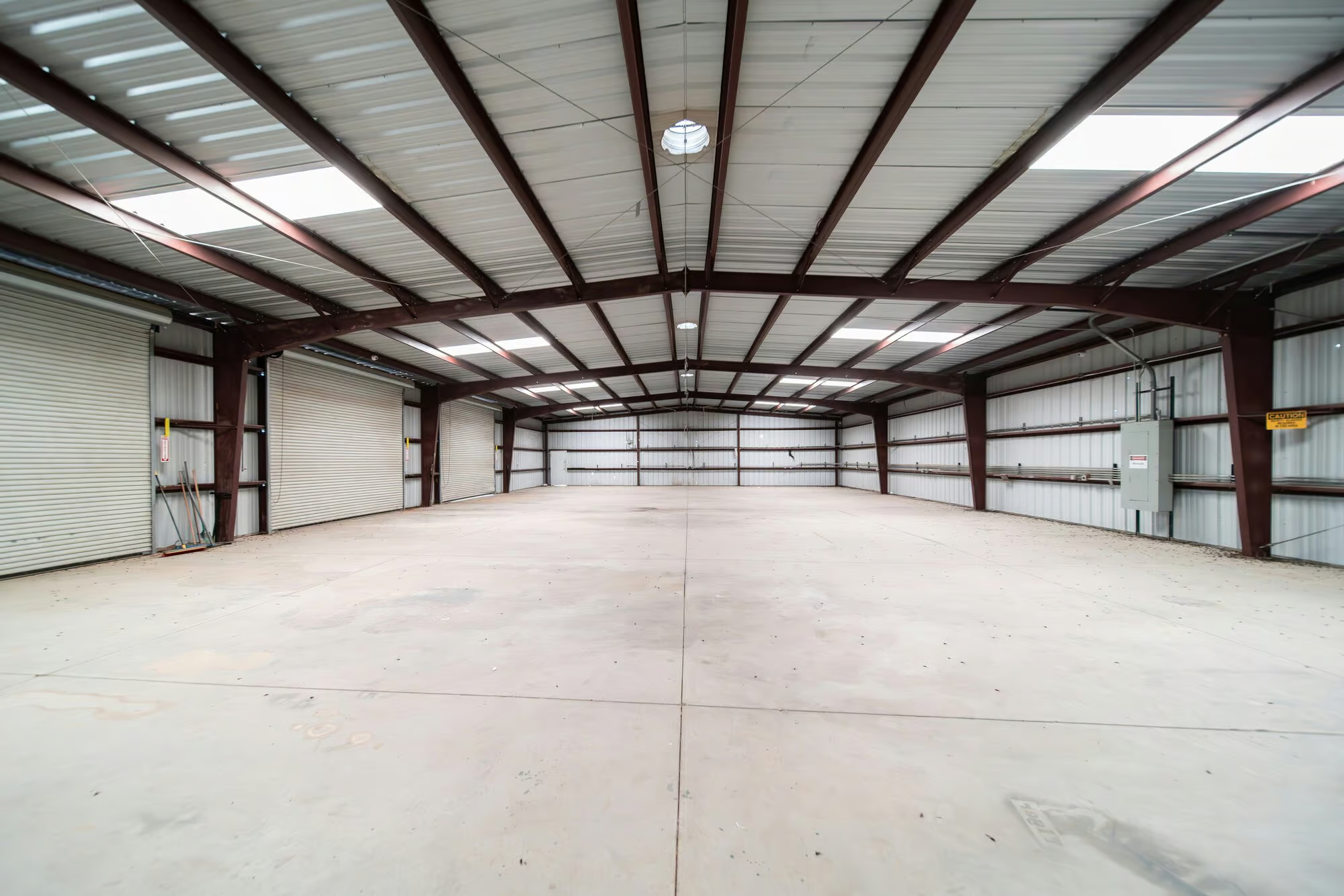
Deciding if a warehouse needs a commercial-scope inspection
The question we'd ask first isn't how big the building is. It's who pays when something fails. A warehouse is mostly a big roof, a slab, a frame, and the systems that keep it running. When one of those goes bad, the repair is rarely small. If that bill would land on you, you want to know about it before you sign.
Here's when we'd tell you a full commercial-scope inspection makes sense:
- You're buying the building outright, or with partners, and you'll own every repair from day one.
- You're signing a lease that makes you responsible for the roof, structure, HVAC, or other major systems. Read that part of the lease twice.
- The building has been empty for a while, or it's changing from one use to another, like storage turning into light manufacturing or a shop space.
- You're financing the purchase, and you want your own record of the building's condition instead of relying only on what the seller tells you.
- The building has add-ons over the years, like extra overhead doors, a converted office area, or an attached shed, and you can't tell what was done right.
Now for when you probably don't need one. We'd rather tell you this straight than sell you something you don't need.
- If the building is a detached shop or barn on a house you're buying, it can often be looked at as part of a home inspection. You may not need a separate commercial job.
- If you're signing a short lease and the landlord covers every repair, a full inspection may cost more than it protects. A careful walk-through and good photos at move-in might be enough.
- If you only have one worry, like a roof leak over the back bay, a specialist in that one system may answer your question faster.
- If you need to know whether the building meets current code or can get an occupancy certificate for a new use, that's a question for the City of Brownwood's building officials. An inspection reports condition. It doesn't grant approval.
- If the building has a fire sprinkler or alarm system, testing and certifying it is work for a licensed fire protection company.
There's also a middle ground. If the warehouse is part of a bigger property, like a business with a storefront up front and storage in back, it may make more sense to look at it as one commercial building inspection. If heavy equipment, production lines, or process piping are in play, the job leans toward an industrial or factory inspection. Those are different scopes, and it helps to say up front which one you're dealing with.
If you're not sure which side of the line you're on, that's normal. Most folks aren't. Before Mike trained as an inspector, he studied chemical engineering at Texas Tech and spent five years on Navy submarines. Both taught him the same thing: start by figuring out which question you're trying to answer. Tell us what the building is, how you plan to use it, and what your contract or lease says about repairs. From there, it's usually clear whether you need the full commercial scope, something smaller, or a different kind of pro.
What a warehouse inspection covers
A warehouse inspection looks at the parts of the building that cost the most to fix: the roof, the slab and frame, the doors and dock areas, the site around the building, and the systems that keep it running. The goal is to tell you what condition those things are in today and what's likely to need money soon.
We like to think of a warehouse as a few big systems working together. If water gets past the roof, it ends up on the slab. If the ground doesn't drain away from the walls, the slab and dock areas take the hit. So an inspection follows how one problem feeds the next, not just a checklist of parts.
Here's what that usually includes:
- Roof: the panels or membrane, fasteners, seams, flashing, skylights, gutters, and drains. Signs of standing water, rust, patched leaks, and stains on the underside of the roof deck tell a lot.
- Structure: cracks or uneven spots in the slab, the condition of columns, beams, and wall panels, and any signs the building has moved or settled.
- Overhead doors and docks: how the doors open and close, damage from forklifts or trucks, and the condition of the dock area, bumpers, and the slope that carries water away.
- Site and paving: drainage around the building, low spots that hold water, and the condition of the parking and truck areas.
- Electrical: the main service and panels, plus visible wiring, lighting, and any signs of overloading or amateur work.
- Heating, cooling, and ventilation: unit heaters, rooftop units, exhaust fans, and the office area's system, checked for age and general condition.
- Plumbing: restrooms, water heaters, visible supply lines, and floor drains.
- Office and finished areas: the converted or added spaces where shortcuts tend to hide.
If the warehouse is one part of a larger property, a commercial building inspection covers the whole site in one job. That's also where things like an attached storefront or office building get folded in.
It's just as important to know what an inspection doesn't cover. An inspector looks at what can be seen and safely reached. That means nothing gets torn into, like opening walls, cutting into the roof, or digging up the slab. Environmental testing, such as checking for asbestos in older building materials or contamination in the soil, is separate work. So is anything tied to your business equipment, like racking, forklifts, or production machinery. As covered above, code approval and sprinkler certification belong to other pros too.
What you should walk away with is a clear picture, not a pile of jargon. A good report tells you what was found, why it matters, and roughly how soon it needs attention. A rusted roof fastener and a sagging roof beam aren't the same kind of problem, and you deserve to know which is which.
That's the part we enjoy most. Mike studied chemical engineering because he wanted to know how things work, and he still does. When you understand why a dock floods or why a back corner of the slab cracked, you can plan for it, negotiate around it, or walk away from it with your eyes open.
When a warehouse inspection is not the right service
A warehouse inspection is the wrong tool when your real question is about value, how to fix something, what a repair will cost, a lender's report format, or worker safety. An inspection tells you what condition the building is in. It doesn't set a price, design a repair, or sign off on anything. We've already gone over the simpler cases, like a shop on a home lot or a code question for the city. These are the ones that tend to come up later in a deal, when time is short.
- You need to know what the building is worth. That's an appraisal, and your lender usually orders it. An appraiser may mention condition, but the job is putting a number on value. An inspection report can help you decide whether the asking price feels right. It won't give you a figure a bank will lend against.
- You already know there's a structural problem, and you need a fix. If you can see a wall panel bowing or a slab corner that has dropped, the next call is to a structural engineer. An inspector can find a problem like that and describe it. An engineer works out the loads and draws up a repair a contractor can build from.
- You need repair prices. An inspection doesn't come with bids. If you want to know what a new roof or repaved truck court will cost, get quotes from contractors who do that work. The report can tell you how urgent something looks. Dollar figures come from the people who'll do the job.
- Your lender or investor wants a specific type of report. Some ask for a property condition assessment or an environmental site assessment done to a set standard. Those are different products with their own formats. Ask your lender exactly what they need before you hire anyone, so you don't pay for the wrong report.
- Your concern is how the business runs inside the building. Questions about worker safety, forklift traffic, or safe work practices belong to a workplace safety consultant or your insurance carrier's loss control staff.
- You're filing an insurance claim after storm damage. An inspection can document the condition of the roof or walls. Whether the damage is covered, and how much gets paid, is decided by your insurance company and its adjuster.
Here's a common mix-up. Say you're a few days from closing, and you walk the back bay and spot a long crack running across the slab with one side a little higher than the other. You don't need someone to tell you there's a crack. You can see it. What you need to know is why it happened and what it'll take to fix. That's an engineer's question.
Sometimes the right order is both, one after the other. An inspection looks over the whole building and points out the things that need a closer look. Then a specialist answers those narrower questions. If you skip the first step, you may fix the crack you saw and miss the roof drain that caused it.
If you can't tell whose question you're asking, ask before you book anyone. A good inspector should be glad to point you somewhere else when that's the better answer.
Thinking about a warehouse inspection in Brownwood? Let's talk.
Call (325) 510-3305 · report within 24 hours
Why qualifications matter more than licensing alone
A license tells you an inspector met the state's minimum bar. It doesn't tell you whether they can read a big metal building well. In Texas, inspectors are licensed through the Texas Real Estate Commission, and those rules and standards were written around homes. A warehouse has a different roof, a much bigger slab, truck traffic, and systems you won't find in a house. So when you're hiring someone for a warehouse inspection, the license is where your questions start, not where they stop.
Mike knows those rules pretty well. In 2019, he was one of six inspectors in Texas appointed to TREC's Inspector Advisory Committee. The committee helped write the rules and educational materials for the state's inspection industry. It was a privilege, and it took a lot of time. It also showed him what a license covers and what it was never meant to cover. A license sets a floor. It doesn't decide whether someone notices that a dock slopes toward the building instead of away from it.
Before you hire anyone, us included, here's what we'd ask:
- What's your license number? A real inspector will give it to you right away. Mike's is TREC #6231, and you can look it up.
- Have you inspected commercial buildings like this one? A metal warehouse, a block building with a converted office, and a strip of retail bays each have their own trouble spots.
- What will the report cover, and what won't it? Get that in writing before the visit, so nothing surprises you after.
- Can I see a sample report? Look for plain explanations and photos, not just checkboxes.
- Will you tell me how urgent each item is? A list of 80 findings with no sense of priority isn't much help when you're negotiating.
- Who else should I call? A good inspector will tell you when something needs an engineer, a roofer, or another specialist.
Pay attention to how they answer, too. If someone can't explain in plain words why a roof drain matters to a slab crack, the report probably won't explain it either. You're not just paying for someone to look. You're paying for someone who can tell you what it means.
Mike's own path here wasn't a straight line. We've already mentioned the engineering degree and the Navy submarines. In 2002 he got laid off from an engineering job, and he took that as his cue to get licensed and start his own inspection business here in Brownwood. The company has been inspecting full-time in the Brownwood and Abilene area ever since. Over that time, Mike has found that the training matters less than the habit it builds. He wants to know how a building works, why a problem showed up where it did, and what it's going to do next.
That's what we'd want from anyone walking your building with you. Someone with a license, sure, but also someone who can tell you what they found, why it happened, and how worried you should be. That's what makes the difference when you're deciding whether to buy, sign, negotiate, or walk away.
How pricing works for warehouse and industrial inspections
Most home inspections are priced a lot like a menu, mostly by square footage and a few add-ons. Warehouse and industrial inspections usually aren't. They're typically quoted job by job, because two buildings the same size can take very different amounts of time to inspect. A plain metal box with one restroom isn't the same job as a building with a finished office, six rooftop units, and a dock that's been patched three times.
Here's what tends to push the time, and the cost, up or down:
- Size and layout. More square footage means more roof, more slab, and more walls to look over. A single open bay goes faster than a building broken into suites or add-ons.
- Roof access. A roof that's easy to reach is quicker than one that needs a tall ladder, a lift, or a hatch through the ceiling. If parts of the roof can't be safely walked, that changes what can be seen, too.
- Number of systems. Each rooftop unit, unit heater, electrical panel, and water heater takes time. A building with one small office system is simpler than one with heating and cooling spread across the whole floor.
- Finished space. Offices, break rooms, and restrooms carry more plumbing, wiring, and finishes than open storage.
- Number of buildings. A property with a main warehouse plus a shop or storage building is really two or three inspections in one visit.
- Equipment and process systems. Once production lines, process piping, or heavy equipment are part of the question, the job moves toward an industrial or factory inspection and the scope gets bigger.
- Report requirements. If a lender wants a report built to a set format, that's more work than a standard condition report. Ask them before you get quotes.
Some extra services are priced on their own. A thermal imaging inspection can help find moisture under a roof or hot spots in electrical panels that you can't see with your eyes. A sewer line scope runs a camera through the main drain line, which is worth it on an older building or one with floor drains that back up. You don't need either one every time. It depends on the building and what worries you.
When you're comparing quotes, compare what's covered, not just the bottom line. A low quote may mean the roof gets looked at from the ground, the rooftop units get a quick glance, or the report is a checklist with no photos. A higher quote may include things you don't need. Line the scopes up side by side and you'll usually see why the numbers differ.
Timing matters too. If your option period or lease deadline is a few days away, say so when you ask for a quote. A rushed schedule can limit who's available, and you'll want time to read the report and call in an engineer or roofer if something turns up.
The easiest way to get an accurate quote from anyone is to have a few things ready: the address, the rough square footage, the building's age if you know it, how many buildings are on the property, what's inside (open storage, offices, equipment), and your deadline. With that in hand, an inspector can tell you what the job involves before anyone climbs a ladder.