
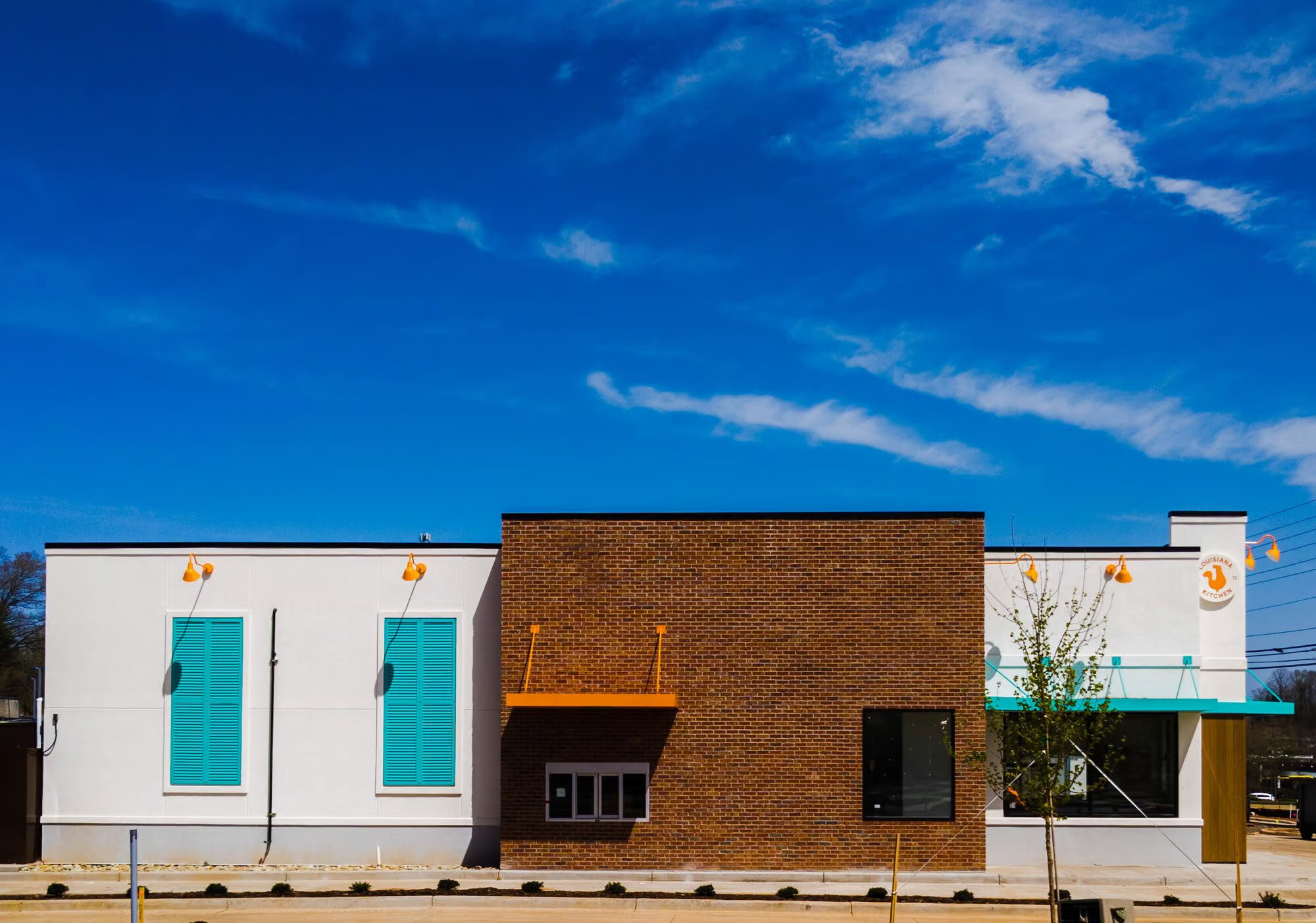
This restaurant inspection checks the building, not the kitchen's health score
When folks ask about a restaurant inspection in Brownwood, the first thing we like to clear up is which inspection they mean. There are two kinds, and they answer different questions.
The health inspector cares about food. That means cold storage temperatures, handwashing, and how food is kept and prepared. That's the kitchen's health score, and it belongs to whoever runs the restaurant. A building inspection cares about the things that stay put when the operator leaves: the roof, the walls, the pipes, the wiring, and anything bolted to the building. If you're buying or leasing a restaurant property, that's the part you'll own or be on the hook for.
A restaurant building works a lot harder than a house. Hot, greasy air gets pulled through a hood and pushed out the roof. A lot of water and grease go down the drains every day. Cooking equipment draws a lot of power. A building inspection on a restaurant pays close attention to how those systems work together and where the wear tends to show up. The areas it commonly covers include:
- Roof and rooftop units. Exhaust fans sit up there, and grease that escapes can wear on the roofing around them.
- Heating and cooling. A kitchen pushes a lot of air outside, and that air has to be replaced, so the HVAC carries a heavier load than in an office or shop.
- Plumbing and drains. This covers floor drains, sinks, water heating, and visible signs of trouble around the grease trap.
- Electrical. This covers the panel and visible wiring, and whether they look right for commercial cooking.
- Structure and finishes. This covers floors, walls, and ceilings, including signs of water damage or settling.
- Restrooms and the dining room. These are the spaces your customers will see and judge.
Some things fall outside a building inspection, and we'd rather tell you that up front. The fire suppression system over the cooking line is serviced and tagged by specialty companies that handle that work. Fryers, ovens, and other cooking equipment often belong to the business instead of the building, and they're usually part of a separate deal. Permits and code sign-offs go through the city. A building inspection can point out something that looks off, but it isn't a code inspection or a permit approval.
Here's why the difference matters. A restaurant can have a spotless health score and still have a tired roof, an undersized panel, or slow drains. Those are the costs that land on you after closing, not on the last operator.
Mike Morgan came to this work after earning a chemical engineering degree at Texas Tech and spending five years as an officer on Navy submarines. He's always wanted to understand how a system works, not just whether it's running today. He has been inspecting in the Brownwood and Abilene area since 2002 under TREC license #6231. In 2019, Mike was one of six inspectors appointed to the Texas Real Estate Commission's Inspector Advisory Committee, which was a privilege. What we enjoy most is walking you through what the inspector found so you understand the building you're taking on.
Buying, leasing, or financing a restaurant property triggers this inspection
A restaurant inspection is one kind of commercial building inspection, built around the systems a kitchen leans on hardest. Most folks need one at one of three moments: they're about to buy a restaurant building, sign a lease on one, or borrow money against one. Each of those puts you on the hook for the building in a different way, so the inspection answers a slightly different question each time.
If you're buying, you'll own all of it. That includes the roof, the rooftop units, the drains, and the electrical panel. The inspection belongs inside your option or due diligence period, while what you learn can still change the price, the repair list, or whether you go through with the deal. Once that window closes, a report stops being a bargaining tool. It just becomes a list of things you're going to pay for.
If you're leasing, read the lease before you decide how much the building's condition matters to you. Many commercial leases make the tenant responsible for things like the heating and cooling, the plumbing, and sometimes even the roof. Say your lease puts you in charge of the rooftop unit that cools the kitchen. You'd want to know how old and worn it is before you sign, not on a hot afternoon in July when it quits during the lunch rush. An inspection also gives you a written record of how the space looked when you moved in. That can help settle questions about who caused what when the lease ends.
If you're financing, ask your lender early what they need to see about the property's condition. Requirements vary from lender to lender. Knowing them before the inspection is scheduled lets you make sure the report speaks to their questions, so you aren't chasing extra paperwork at the last minute.
There's one more situation worth thinking through. If you're moving into a space that was never a restaurant, like an old retail storefront, an inspection can tell you what's already there. It can show you the size of the electrical panel, where the drains run, and what shape the roof is in. It can't design your kitchen buildout, though. That work belongs to your contractor, your equipment people, and the city's permit process. Still, knowing what you're starting with keeps those conversations grounded in fact.
Now, here's a case where you may not need much from us. If you're only buying the business and the landlord keeps full responsibility for the building's repairs, a building inspection matters a lot less to you. In that case, your time is better spent on the lease terms and the business records. Just make sure the lease says that before you count on it. A lot of leases that sound landlord-friendly at first glance hand the tenant more of the building than people expect.
- Buying: schedule inside your option or due diligence period.
- Leasing: check which systems the lease makes yours, then inspect before you sign.
- Financing: ask your lender what condition information they need before you book.
A working restaurant is easiest to look at when it isn't busy. Plan the timing with the seller or landlord so the kitchen, the roof, and the back rooms are all open to see.
What a restaurant building inspection looks at
The easiest way to understand a restaurant building is to follow what moves through it. Air, grease, water, and electricity all come in, do their work, and have to leave. Most expensive problems show up where one of those paths is struggling. A good inspection follows each path and looks for the spots where it's backing up, wearing through, or running past what it was built to carry.
Air is the one people don't think about. A kitchen hood pulls a lot of air out of the building. That air has to come back in somehow. When there isn't enough makeup air, the building runs at negative pressure, and you can often feel it. The front door is hard to pull open. Smoke and heat roll out from under the hood instead of going up it. Gas appliances and water heaters can have trouble venting the way they should. None of these things look like a big deal by themselves. Together, they tell you the air system is out of balance. That can mean real money in ductwork or equipment.
Grease follows the air. Some of it always gets past the filters, travels up the duct, and lands on the roof around the exhaust fan. Over time, grease can soften and break down some roofing materials. So the area around the fan gets a close look, along with any staining or ceiling damage in the kitchen right below it. A water stain on the ceiling tile under a rooftop fan is a small clue that's worth following up.
Water has two jobs in a restaurant. It has to arrive hot and in volume, and it has to drain away carrying grease and food scraps. On the supply side, the question is whether the water heating looks like it can keep up with a dish machine and sinks running at the same time. On the drain side, the signs are practical ones:
- Floor drains that hold standing water or smell like sewer gas
- Sinks that drain slowly when several are running at once
- Cracked tile, soft spots, or loose flooring near the dish area and mop sink, where water sits day after day
- Staining, odor, or damage around the grease trap and the floor near it
Electricity is about load. Cooking equipment, walk-in coolers, ice machines, and rooftop units can all pull power at the same time during a rush. The visible signs of a system working too hard include a panel that's warm or shows scorch marks, breakers that have been relabeled or doubled up, and extension cords doing a permanent job. If the last operator ran a small menu and you plan to add equipment, it helps to know what the panel looks like before you buy the fryer.
The roof ties several of these together. Exhaust fans, cooling units, and sometimes the walk-in cooler's condenser all sit up there. Every hole cut for them is a place water can get in. Low spots where water ponds near those units deserve attention, because a leak over a kitchen causes more trouble than one over a storage closet.
When the inspector finds something, we try to explain what it's connected to, not just what it is. A slow drain might be a cleaning issue, or it might be a pipe problem under the slab. A hard-to-open door might just need adjusting, or it might be your first sign of an air problem. Knowing which one you're looking at is what helps you decide what to ask the seller or landlord to fix, or how to price the deal.
Thinking about a restaurant building inspection in Brownwood? Let's talk.
Call (325) 510-3305 · report within 24 hours
Mike Morgan's credentials matter for commercial property decisions
On a restaurant deal, the report is only worth what you can do with it. You might use it to ask for a lower price, push for a repair, or change a lease clause. You might use it to decide to walk away. To do any of that, you need findings that are clear, tied to the right system, and honest about what wasn't looked at. That's where an inspector's background shows up on the page.
We've already told you about Mike's engineering degree and the submarine years, so we won't repeat them. What they gave him is a habit. When he sees a symptom, he wants to know what's causing it. A stained ceiling tile, a door that's hard to open, and a warm panel can look like three small problems. Sometimes they turn out to be one bigger one. We'd rather sort that out before you sign than after.
Mike's time on the TREC Inspector Advisory Committee helped in a different way. Helping write rules and educational materials for inspectors across Texas made him careful about the edges of an inspection. Our reports try to say plainly what the inspector looked at, what they couldn't get to, and what needs a specialist. On a commercial property, that line matters. A seller or landlord will read the report too.
Whoever you hire, here are a few questions worth asking before you book:
- What's your license number? A real number is something you can check yourself.
- Can I see a sample commercial report? Look for clear write-ups and photos, not a wall of checkboxes.
- Will you go up on the roof, or only look at it from the ground? On a restaurant, the roof is where a lot of the story is.
- What's left out? Ask about the hood fire suppression system, cooking equipment, and code compliance before the day of the inspection, not after.
- Will you talk me through the findings? A report you don't understand won't help you bargain.
You'll also want to know what shapes the cost, since commercial inspections aren't priced like a house. The main factors are the size of the building and how many rooftop units and systems there are. Easy access to the roof and back rooms helps, and so does how fast you need the report. Add-ons count too. A sewer line scope can run a camera through the main drain to look for breaks or buildup under the slab. A thermal imaging inspection can help spot hidden moisture or electrical hot spots. Both are services we offer, and each has its own page if you want the details. Ask for a quote that spells out what's included, so you're comparing like with like.
We've been doing this work around Brownwood and Abilene since 2002. The part we still enjoy most is helping someone understand the building in front of them well enough to make a good call on it.
Restaurant properties often need related system checks too
A building inspection covers the shell and the main systems. Some restaurant properties also depend on things that sit outside the walls or under the ground. Whether you need extra checks comes down to a few plain questions: Where does the water come from? Where does the waste go? And what is the building made of? Here's how we'd think it through.
Start with the drains. If the restaurant ties into city sewer, the main concern is the line between the building and the street. A sewer line scope makes sense when the building is older, when the drains were slow during the inspection, or when you can't get a clear answer about the last time the line was cleaned. If the building is fairly new and every drain ran clear, you may be fine without one. That's a fair call to make.
Some restaurant properties around Brownwood sit outside city utility service. Think of a cafe or barbecue place out on a highway. Those buildings may be on a septic system, and a restaurant is hard on septic. A home sends mostly water down the drain. A kitchen sends grease and food scraps every day, in much larger amounts. If the grease trap isn't kept up, that grease can reach the tank and the drain field, and drain field repairs aren't small. If the listing or the seller says septic, a septic system inspection belongs on your list.
The same properties may also get their water from a well. A well system inspection looks at the equipment and how it's working. Keep in mind that a well serving the public can come with separate water rules and testing. Ask the county or the state about those before you count on the well as it is.
Then there's the structure itself. Many smaller restaurant buildings have wood framing somewhere, even if the front is brick or metal. Kitchens bring in a lot of moisture, and termites like moisture and wood. A termite inspection, performed by our licensed partner, is worth adding for any building with wood framing, wood trim at the ground, or a past water problem near the walls.
Thermal imaging, which we covered above, earns its spot when you've seen hints of hidden moisture or an electrical panel that's working hard. Neither one is an automatic add-on.
If the restaurant is one unit in a strip center, ask what else your lease or purchase makes yours. When you're buying the whole center, the other storefronts may call for a retail property inspection or a broader commercial building inspection, so you aren't just looking at the one space you plan to cook in.
- City sewer, older building, or slow drains: think about a sewer line scope.
- No city sewer: plan on a septic system inspection.
- Water comes from a well: add a well system inspection and ask about public water rules.
- Wood framing or past water damage: add a termite inspection from our licensed partner.
- Buying a whole center: talk about inspecting the other units too.
You don't need every check on the list. You need the ones that match how this building works. When we talk before the inspection, tell us what you know about the water, the sewer, and the construction, and we'll tell you which extras are worth it and which ones you can skip.