
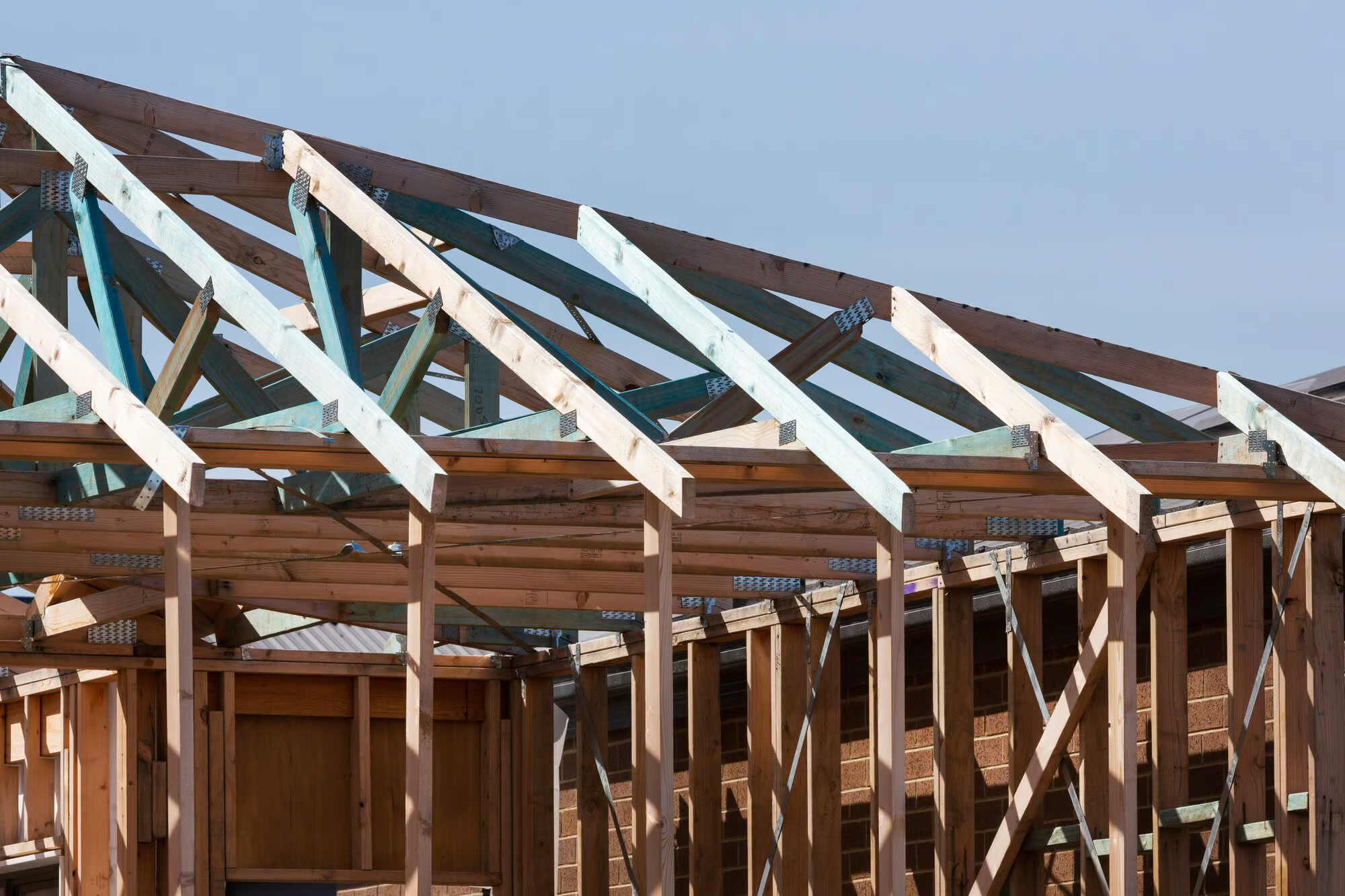
A pre-drywall inspection checks your home's systems before they disappear
A pre-drywall inspection gives you a look at parts of your new Brownwood home that will be hard to see once the walls are closed. With the framing and many system runs still exposed, an inspector can identify visible concerns while you can still point to the exact spot and talk it through with your builder. That's the real value: a clearer picture of the work before it disappears behind drywall.
Think about a wall where electrical cable, plumbing, and framing all meet. After drywall goes up, you may know where the outlets and faucets are, but you can't easily see the paths behind them or how the surrounding framing was put together. Looking while that work is open gives you information you won't get from walking through the finished rooms.
The useful questions are concrete. Are there visible signs of damaged framing or incomplete work? Can you see an exposed pipe, cable, or duct that raises a question about its placement or support? An inspection can help you notice and document concerns like these. It can't tell you what's hidden inside a closed assembly, and a visual finding doesn't, by itself, establish why something was built that way.
We'd rather explain what you're looking at than hand you a list of terms you have to decode. Mike Morgan founded the business in Brownwood in 2002. He has a chemical engineering degree and holds TREC license #6231. Those facts don't make an open wall tell us everything, but they give you a sound basis for choosing someone to help you make sense of what's visible.
This inspection also has a boundary. It isn't a substitute for the builder's work or for required inspections by local authorities. Some systems may not be complete yet, and finishes that matter to how a home works won't be in place. The point isn't to promise a perfect house. It's to give you specific observations you can discuss while the work is still in view, rather than trying to piece together what happened after the walls are closed.
Timing decides whether this inspection is even possible
The right time is after enough framing and rough-in work is in place to look at, but before those areas are covered. That's a narrower window than it sounds. If you book too early, the plumbing, wiring, or ductwork you want checked may not be installed. If you wait until drywall is up, an inspector can't see much of that work at all. The construction stage matters more than the date on your calendar.
Ask your builder what's installed now and when the walls are scheduled to be closed. Be specific about the parts of the home you want to understand. If the electrical work in one part of the house isn't there yet, an inspection that day can't tell you much about it. If another area has already been covered, it won't become visible just because the rest of the house is still open. Those details help you decide whether the timing is useful.
Before choosing a day, it helps to settle three practical questions with your builder:
- Which framing and system runs are installed and still visible?
- Are any areas about to be covered, or have any already been covered?
- When can an inspector have access while the work is still open?
You don't need to know construction terms to have that conversation. You can say, 'I'd like someone to look before the walls go up. What's ready to see, and when will it be covered?' If the answer is that key work is still missing, ask when it's expected. If drywall is planned soon, find out whether there's still an opening to inspect first. A firm construction update is more useful than guessing from the home's expected completion date.
If the walls are already closed, don't expect a pre-drywall inspection to reveal what's behind them. You can still ask your builder questions about that work, but a visual inspection can't turn back the construction stage. If only some rooms are closed, be clear about which areas remain open so you understand what can and can't be assessed. The goal is to choose a time when the work you care about is both in place and visible.
An independent inspection is not the same as the builder's own walk-through
A builder's walk-through and an independent inspection can both be useful, but they answer different questions. The builder can explain what was built, what work is still planned, and why a part of the house looks the way it does. An independent inspector gives you another set of eyes on the work that's visible. If you're building a home in Brownwood, that outside view can help you ask more specific questions before the walls close.
You don't have to assume something is wrong to want that second look. Maybe the builder points out where the plumbing will connect, and you notice a pipe passing through the framing nearby. You may not know whether its location matters. An inspector can describe what can be seen and what question it raises. The builder can then explain the plan or take a closer look. That's a more useful conversation than trying to judge the pipe from a quick glance.
The same goes for a finding you disagree about. An inspection finding isn't an order for the builder to change the work, and it doesn't settle every question about how the home was designed. Ask what the finding means, which part of the work it concerns, and what information would help resolve it. Plans, the builder's explanation, or a closer look by the right trade may give you an answer. The goal is to get a clear answer, not to turn a question into a fight.
Before you hire an inspector, it helps to know what you want from that separate view. Are you hoping to understand a part of the home you couldn't make sense of during the walk-through? Do you want someone who isn't building the house to look at the exposed work? Those are good reasons to consider an inspection. If the builder's answers have already addressed your questions and you don't want another look, you don't need to book one just because it's an option.
Neither visit replaces the other. The builder knows the job and can speak to the work being done. An independent inspector can help you see what deserves a question while it's still in view. That leaves you better prepared to talk with your builder and decide what, if anything, needs follow-up.
Thinking about a pre-drywall inspection in Brownwood? Let's talk.
Call (325) 510-3305 · report within 24 hours
Credentials matter when the inspection is your only chance
When you choose someone to inspect an open house, you're trusting them to do more than spot something unusual. You need someone who can tell you what they can see, what they can't confirm, and which questions are worth taking back to the builder. A confident answer isn't much help if it reaches past the evidence.
In 2019, Mike Morgan was one of six home inspectors appointed to the Texas Real Estate Commission's Inspector Advisory Committee. He helped write rules and educational materials for the inspection industry. That's useful background when you're deciding who to call. It isn't a promise that every concern will be found or that every question can be settled by looking at the exposed work.
Before you book, ask a few plain questions. The answers will tell you more than a long list of credentials on its own:
- Which parts of the home can you assess at its current stage? An inspector should be able to explain why access and installed work matter.
- How will you describe a concern when you can't tell from sight alone whether it's a defect? Look for a clear distinction between what was observed and what still needs an answer.
- What information should I bring to the builder after the inspection? You want to know whether you'll be able to point to the location and ask a specific question.
That last point matters when a finding sounds technical. Say you're told something about an opening cut through a framing member. You shouldn't have to guess which opening the inspector means, or whether the concern is its size, location, or something else. You also shouldn't be asked to treat a visual observation as a final decision about the builder's work. A useful explanation gives you enough to have a focused conversation with the people who can answer for the plans and construction.
Pay attention to how an inspector handles uncertainty before you hire them. It's reasonable to expect a straight answer when a part of the house isn't accessible or when a concern calls for more information. That kind of care can spare you two opposite problems: overlooking a question because it wasn't explained, or worrying about a conclusion the visible work doesn't support.
Pair this with a foundation pre-pour inspection for full new-construction coverage
If you want an independent look at more than one stage of your new home, don't expect a pre-drywall inspection to cover work that's already under concrete. By the time the walls are open, that earlier stage is no longer visible. Pairing inspections means getting a look at each stage while there's something to see, not asking one visit to stand in for the whole build.
Morgan Inspection Services also offers foundation pre-pour inspection, which gives you a separate look at accessible foundation work before concrete covers it. That service has its own timing and scope. The pre-drywall inspection comes later, when you can see work inside the framed house. You can choose one, both, or neither based on which stages you want someone outside the build to observe.
The difference matters when you have a question about the finished home. Suppose you're looking at an open wall and wondering how a pipe is supported. A pre-drywall inspection can give you an observation about what's visible there. It can't tell you what the foundation work looked like before the pour. A look at the foundation stage can't tell you how that pipe will be installed later. They're separate chances to ask better questions, not two versions of the same check.
It's also worth being clear about the word 'coverage.' Two inspections don't mean every part of the house has been checked at every point in construction. Work can be incomplete, blocked from view, or changed after an inspector sees it. Each inspection is a look at accessible conditions on its day. If you're weighing both services, think about the gaps you'd be comfortable leaving to your builder's updates and required inspections, and where you'd value an independent observation.
You don't need to collect inspections just because the house has several construction stages. If your main concern is the wiring, plumbing, and framing you can see now, the pre-drywall stage is the one that speaks to that concern. If you've also been asking what was in place before the concrete went down, a later inspection can't answer that from sight. Knowing that limit can help you decide what information you still need from the builder.
Keep the questions tied to the stage they came from. If something in the open walls raises a concern, ask about that visible work. If your question is about work that's already covered, ask the builder what records or explanations are available. That distinction won't settle every issue, but it keeps you from treating a guess about hidden work as an inspection finding.