
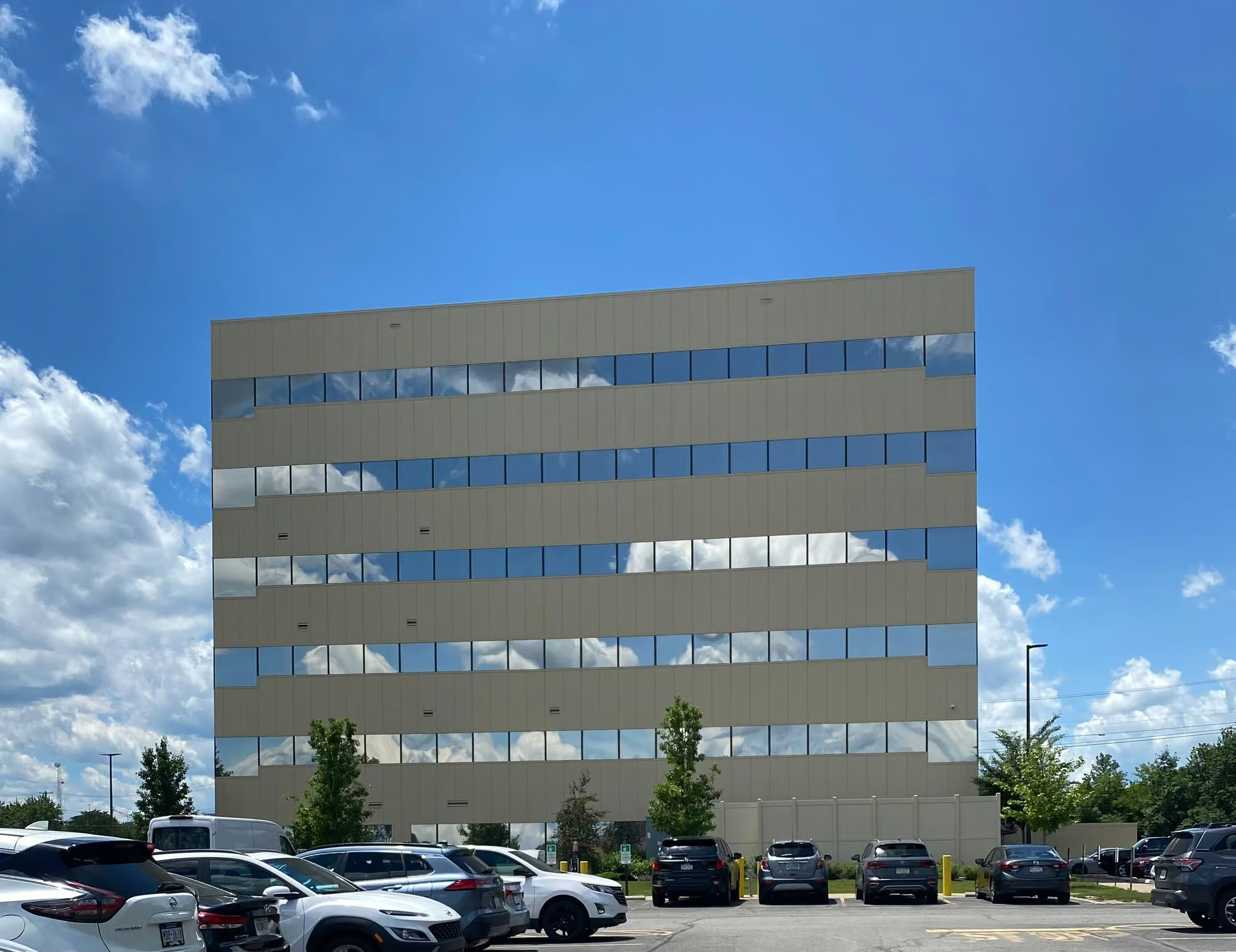
Office building inspection covers structure, systems, and shared infrastructure
Here's the simple version. An office building is a set of systems that all lean on each other. The roof sheds water so the ceilings stay dry. The ceilings hide the ductwork, and the ductwork depends on equipment that might sit on the roof. If you only look at one piece, you miss how a problem in one place shows up somewhere else.
Mike's degree is in chemical engineering from Texas Tech, and he spent five years as an officer on Navy submarines. On a sub, every system depends on the next one. He's always wanted to understand the nuts and bolts of how a building works, not just what it looks like on the surface. Office buildings reward that kind of curiosity.
The structure comes first. That means the foundation and slab, the walls, the framing you can see, the roof structure, and the stairs. Cracks, sloping floors, and doors that stick can point to movement. Most of the time, movement is the real question, not the crack itself.
Next come the systems that keep people working:
- Roof covering, flashing, roof drains, and every spot where pipes or equipment pass through the roof
- Heating and cooling equipment, including rooftop units, and how they're zoned across suites
- Electrical service, panels, and signs that circuits are overloaded or have been changed without much thought
- Plumbing supply and drains, water heaters, and restrooms
- Windows, doors, and sealants, where water and air like to sneak in
Then there's the shared infrastructure. This is where office buildings differ most from houses. Hallways, common restrooms, the entry, the parking lot, exterior lighting, and the equipment that serves several tenants all belong to the building, not to one suite. If you're buying, those costs are yours. If you're leasing, your lease decides who pays when they fail. Either way, you want to know their condition before you sign.
Think about a buyer walking through a quiet building on a Saturday. The lobby looks fresh and the suites are clean. What they can't see is the water stain hidden above one ceiling tile, or the rooftop unit that's been patched more than once. Those are the things an inspection is supposed to find.
It helps to be clear about the limits, too. An inspection is visual and non-invasive. We don't open walls, and an inspection report isn't a code certification. Elevators, fire sprinkler systems, and fire alarms have their own licensed testers. If something needs a structural engineer or a specialist, the report should say so plainly. That's not a dodge. It's what keeps you from spending money in the wrong place.
Two related services can fill gaps a standard visual inspection can't reach. A thermal imaging inspection can show heat patterns linked to moisture or electrical trouble behind finished surfaces. A sewer line scope puts a camera inside the main drain, which matters in any building with years of restroom traffic behind it.
A qualified inspector matters more than a generic checklist
A checklist can tell you a rooftop unit is there and it turned on. It can't tell you whether that unit is close to the end of its life, or whether the ceiling stain two suites over is coming from it. That gap is the difference between an inspector filling out a form and one who explains the building to you. When you're about to buy or lease an office, the second kind is what you're really paying for.
Here's what stands behind our reports. Mike Morgan holds TREC license #6231. He founded the business here in Brownwood in 2002, and the company has been inspecting full time in the Brownwood and Abilene area ever since. In 2019, Mike was one of six inspectors in Texas appointed to the Texas Real Estate Commission's Inspector Advisory Committee. That group helps write the rules and educational materials for inspectors across the state. Mike calls it a privilege, and a time-consuming but rewarding one.
You don't have to take our word for any of that. Whoever you hire, these questions will tell you a lot:
- What's in scope, and what isn't? Get it in writing before the visit, so nobody is surprised later.
- Will you get up on the roof? On an office building, a lot of the expensive equipment lives up there.
- Can I see a sample report? Look for plain explanations of why something matters, not just a page of checkmarks.
- What do you do when you find something outside your lane? A good answer names the kind of specialist you'd need and the reason.
- What's your background? Ask for a license number, how long they've been inspecting, and what kinds of buildings they've looked at.
Price is a fair question too. Office inspections usually aren't priced like a flat-rate house inspection, because the building itself drives the work. Square footage, the number of suites, how many rooftop units there are, the age of the building, and how easy it is to reach the roof all make a difference. Add-ons change it as well. A sewer line scope or thermal imaging takes extra time and equipment. The best thing you can do is ask for a quote based on your actual building, so you know exactly what you're getting.
Office buildings are one part of the commercial building inspections we do around Brownwood, along with retail spaces, restaurants, and warehouses. Each type has its own weak spots, but the job is the same. Find what's there, explain how it's holding up, and tell you plainly what it means for your decision.
If you're weighing an office purchase or lease, the cheapest time to learn what the building needs is before you sign. After that, those problems belong to you or to whatever your lease says.
Single-tenant and multi-tenant office buildings need different scope
Not every office building needs the same inspection. The right scope depends on two things: how many tenants the building has, and what you're taking on. If you get those two answers straight before the visit, the report will cover what you'll be paying for. It won't spend pages on things that aren't yours.
A single-tenant building is the simpler case, at least on paper. One company uses the whole thing. If you're buying it, or leasing all of it on terms that make you responsible for upkeep, every system is your problem. That means the inspection should cover the full building, top to bottom. There's no line between your part and someone else's, because it's all your part.
Multi-tenant buildings take more planning. The scope changes depending on which side of the deal you're on.
- Buying the whole building: You're taking on every suite and all the common areas. Ask whether every suite will be looked at, or only a sample. A sample can save time, but it means some spaces go unseen. Know which ones before you sign.
- Leasing one suite: Your suite matters most, but it isn't the whole story. The equipment that heats and cools your space might sit on the roof or in a shared closet. The restrooms down the hall might be the ones your staff uses. Ask for the systems that serve your suite to be included, even if they're outside your walls.
- Leasing a larger share: If you'll have several suites or a full floor, the scope should grow to match. Look at what your lease makes you responsible for, and inspect that.
Access is the other big difference. In a single-tenant building, one owner can usually open every door. In a multi-tenant building, people are working in the other suites. Their leases often require notice before anyone comes in. Some suites may have locked server rooms or private offices. If the inspection needs to get into those spaces, the seller or the property manager has to set that up ahead of time. If a space can't be reached, the report should say so. That way you know what wasn't seen.
There's also the question of who owns what. In multi-tenant buildings, some equipment belongs to the landlord and some belongs to a tenant. A tenant might have added a unit for a server room, a small kitchen, or extra lighting. Those add-ons can tie into the building's power or roof in ways nobody wrote down. When the inspection notes something like that, ask who's responsible for it. It's a lot easier to sort out before closing than after.
Here's how it plays out. Say you're a dental office leasing a corner suite in a three-tenant building. You don't need a full report on the accountant's suite next door. You do want to know about the rooftop unit over your space, the roof above it, and the plumbing your sinks will drain into. That's a different job than inspecting the whole building for a buyer, even though it's the same building.
So before you book, have three answers ready. Tell the inspector how many tenants are in the building. Tell them whether you're buying or leasing. And tell them which spaces and systems your deal makes yours. With those answers, the inspection can be built around your decision instead of a generic one.
Thinking about an office building inspection in Brownwood? Let's talk.
Call (325) 510-3305 · report within 24 hours
What triggers the need for an office building inspection
Most people call for an office inspection because something is about to change. Money is about to move, a lease is about to be signed, or the building is starting to act up. The common thread is a decision you can still change. Once that window closes, you've lost your best chance to learn what you're taking on.
Here are the moments that usually call for an inspection:
- Before you buy. This is the big one. Your option or due diligence period is the time to find problems, because you can still ask for repairs, adjust the price, or walk away.
- Before you sign a new lease. If your lease puts any upkeep on you, such as HVAC, roof repairs, or a share of common area costs, you want to know what shape those things are in on day one.
- Before you renew. Five or ten years can wear a building down. A renewal is a good time to see whether the equipment serving your space is close to needing replacement, and to work that into the new terms.
- Before you move out. A record of the space's condition can help settle questions about what was already worn and what happened on your watch.
- Before you sell. A pre-listing look helps an owner find problems early, so a buyer's inspector doesn't surprise everyone halfway through the deal.
- Before a renovation or change of use. Turning offices into a clinic or adding a break room kitchen puts new demands on plumbing, power, and cooling. It's smart to know what the building can handle first.
Then there are the times the building tells you something's wrong. Watch for these:
- Stained or sagging ceiling tiles, especially after rain
- Some rooms that never get cool while others are freezing
- Breakers that trip often, or lights that flicker when equipment kicks on
- New cracks in walls or floors, or doors that suddenly stick
- A musty smell nobody can track down
- Slow drains or recurring restroom backups
Any one of those can be minor. The trouble is you can't tell from the stain alone whether it's a loose flashing or a roof near the end of its life. That's the kind of question we like to chase down. We want to know where the water starts, not just where it shows up.
A major storm is another good reason to have someone look, even if nothing seems wrong inside yet. Roof damage often shows up on the ceiling weeks later. By then, the insulation and tiles may be soaked too.
To be fair, sometimes you don't need an inspection. Say you're renting a small furnished suite on a short lease, and the landlord handles every repair. A careful walk-through and a few questions may be all that makes sense. Read the lease closely, take photos of the space when you move in, and ask who to call when something breaks. If the lease puts no repair costs on you, a full inspection would mostly tell you about problems that belong to someone else.
The test is simple. If the building's condition could cost you money or change your decision, it's worth an inspection before you commit.
When a full office building inspection is not the right call
We'd rather tell you this up front than sell you something you don't need. A full inspection answers one big question: what shape is this whole building in? If your question is narrower, or it's a different kind of question, someone else may be the better first call. We've already mentioned the small furnished suite on a short lease. Here are the other cases where we'd point you somewhere else.
You already own the building and you know what's wrong. Say the roof over the back offices leaks every time it rains hard, and you've owned the place for years. You don't need someone to look at every outlet and faucet to learn that. Call a roofer. If the AC in one wing can't keep up, call an HVAC contractor. They can diagnose and fix the problem in the same visit. A full inspection makes more sense when you don't know what you don't know.
You're about to gut the inside. If the plan is to strip the building down to the shell and rebuild the interior, a report on worn carpet, old fixtures, and ceiling tiles won't help you much. Those things are going in the dumpster anyway. What matters is the bones, the roof, and whether the power and plumbing service can handle the new layout. Tell whoever you hire about the plan, and narrow the scope to fit it. If you're worried about the structure itself, a structural engineer may be the right person to start with.
Your question is about code, permits, or accessibility. Whether a space meets current code for a new use is a question for the city's building officials and the design professionals working on your project. Accessibility reviews are their own specialty too. An inspection can tell you what's there and how it's holding up. It can't sign off that a building is legal for what you want to do with it.
You need lab testing or a lender's report. If you suspect asbestos in old floor tile or ceiling material, or you want air or mold samples sent to a lab, you need an environmental consultant. Some lenders also ask for a specific type of report on commercial loans. Before you book anyone, ask your lender exactly what they require. Sometimes a general inspection fits, and sometimes it doesn't, and it's better to find that out before you've paid for the wrong one.
You've already closed and you just want upkeep. Once the deal is done, an inspection has done its main job. Ongoing care is better handled by a good maintenance plan with the trades who service your roof, HVAC, and plumbing.
None of these mean an inspection is a bad idea. They just mean it's the wrong tool for that particular question. If you aren't sure which kind of help you need, describe the situation to whoever you're thinking of hiring. A straight answer about who should look at it first is worth more than a long report that doesn't answer what you asked.