
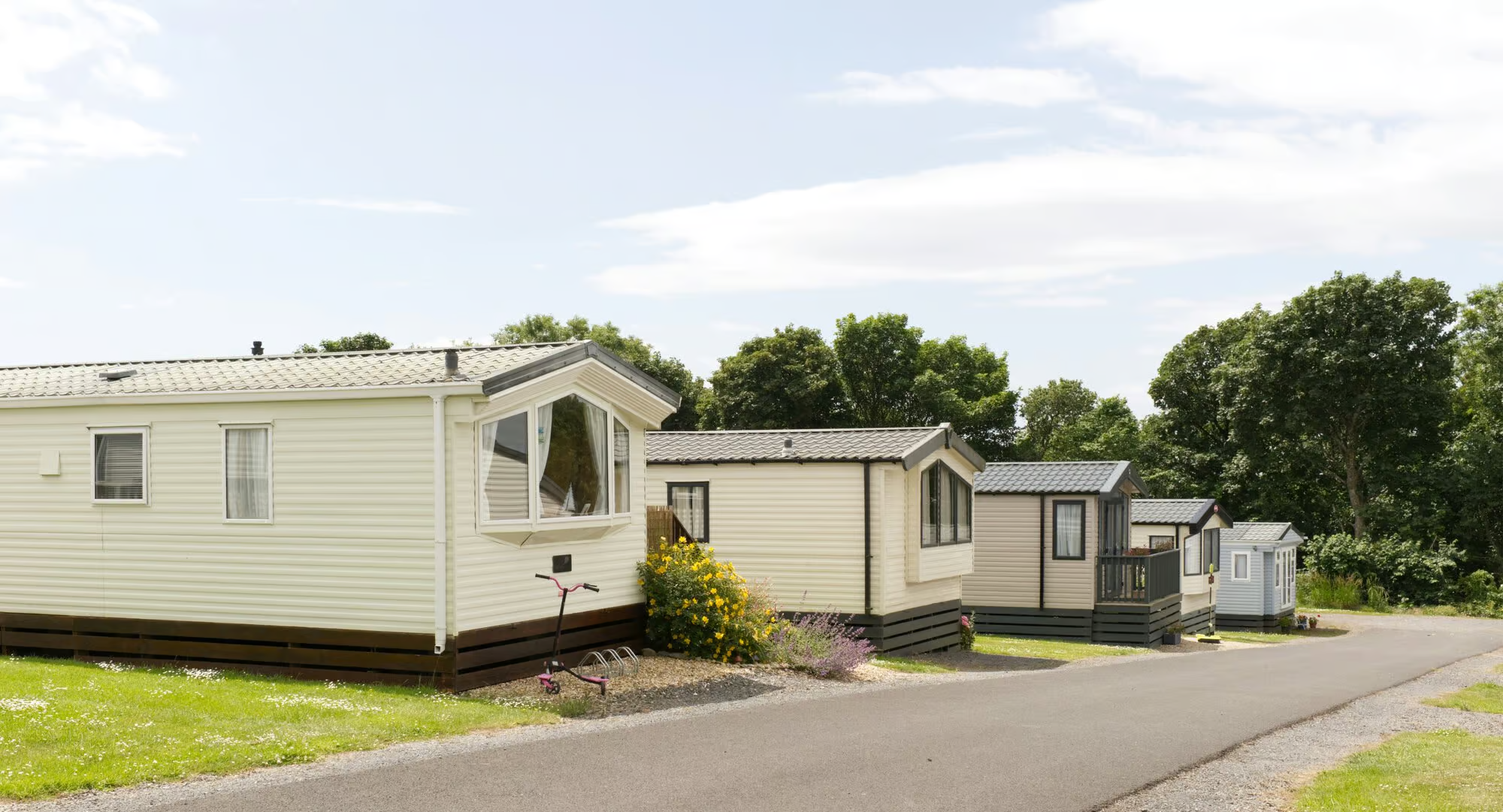
An independent inspection isn't the retailer's pre-delivery check
If you're told, "It's already been inspected," ask what that means. Was someone checking for damage before delivery, testing certain parts of the home, or looking at the finished home on its site? Those aren't the same job. A home can look fine on a sales lot and still have questions that only come into view after it's placed. In Abilene, the lot where you plan to live matters: the sales lot can't show you how the home will sit there, where water will go around it, or what its finished connections will look like.
- Support and setup: The home needs to rest on its own site. A check before delivery can't show the condition of supports that aren't in place yet.
- Outside water: Where the ground slopes and where downspouts empty can affect whether water collects near the home. You can't judge that from a check at another location.
- Connections: Plumbing, electrical, and heating and cooling equipment may involve work at the site. Ask which connections had been completed when a check was done.
- Access: Skirting, stored items, or locked areas can hide parts of the home. An inspection can only speak to what was accessible at the time.
None of that means the retailer's check has no value. It means you should read it for what it covers, not as an answer to every question about the home you're buying. If the home hasn't been placed yet, even an independent inspector can't assess supports or connections that don't exist. If it's already on the property, ask whether those areas are accessible and included in the inspection you're arranging.
The useful question isn't whether someone has looked at the home. It's what they could see, what they checked, and what was left for later. An independent inspection can give you a different view. It's focused on helping you understand the home's condition, rather than preparing it for delivery. Morgan Inspection Services offers manufactured home inspections, and Mike Morgan is a Texas Real Estate Commission inspector, license #6231. When you call, describe whether the home is still on a sales lot or is already set on the property so you can discuss what an inspection could cover.
Texas splits oversight between installation rules and inspector licensing
Texas treats the installation of a manufactured home and the licensing of a home inspector as different matters. That distinction is worth knowing before you buy. An inspection can help you understand the condition of the home as it stands today. It isn't a certificate that the installation followed every applicable requirement.
Mike Morgan holds Texas Real Estate Commission inspector license #6231. That tells you who is responsible for the home inspection. It doesn't turn his report into an installation approval, and it doesn't replace the records from the people who set the home. If a seller says the installation was approved, ask to see the paperwork behind that statement rather than relying on a verbal assurance.
This matters most when you're trying to sort out a concern, not just collect documents. Say a door sticks and there's a gap at the trim. An inspector can report what can be seen and help you understand why it deserves attention. The observation alone can't tell you whether the cause is the original setup, a later change, or something else. You'd need the installation records and, if the concern remains, an evaluation by the right person before treating the cause as settled.
For a home in Abilene, start with the address. Ask the seller for the installation paperwork they have, including who did the work and any records of later changes. Ask the appropriate local office what approvals or records apply to that property. Those questions are especially useful if the home has been moved or altered. Don't assume the paperwork for one location answers every question about its current one.
You don't need to sort out every Texas rule on your own before scheduling an inspection. You do need to keep the two questions separate. What condition is the home in, and what records show how it was installed? A useful inspection helps with the first question. The second calls for documents and, where needed, confirmation from the authority or professional responsible for that part of the work. Knowing which answer you're getting makes it easier to decide what to ask for before you buy.
What gets checked that a site-built inspection skips
A manufactured home has the same everyday systems you'd want checked in any house: plumbing, electrical, heating and cooling, the roof, and the rooms you'll live in. The difference is what holds the home up and how its parts come together. That's where a manufactured home inspection needs a closer look than a typical site-built inspection.
When you arrange an inspection, ask what can be seen beneath the home and whether these manufactured-home details are part of the scope:
- Chassis and support: A manufactured home has a steel frame beneath it. Visible bends, damage, or rust matter, as do the condition and placement of supports that can be seen. An inspector can describe visible concerns without claiming that a hidden part is sound or that the setup meets every rule.
- Anchors and tie-downs: These are meant to help hold the home in place. Ask whether the inspector can see them and report loose, damaged, or missing visible parts. Skirting and limited clearance may keep some of that hardware out of view.
- The joint between sections: If the home came in two or more sections, look closely at where they meet. Uneven floors, gaps, or signs of moisture along that line may point to a problem worth sorting out. The sign tells you where to ask more questions; it doesn't prove the cause.
- Changes made after the home was built: An added porch, deck, room, or roof can affect the home where it attaches. Ask the inspector to note visible changes and any signs of movement or water entry nearby. An inspection won't establish who made the change or whether it was approved.
It's also worth looking for the home's identifying labels and data plate, if they're present and accessible. Those details can help you match the home to its records. Reading a label isn't the same as confirming that every part of the home is unchanged or that its current setup was approved.
Before you book, tell the inspector whether the home has skirting, more than one section, or any additions you know about. Ask what access they'll need and how they'll describe areas they can't see. You want a clear account of the home in front of you, including its limits, not a guess about what's hidden.
Thinking about a manufactured home inspection in Abilene? Let's talk.
Call (325) 998-4663 · report within 24 hours
Why anchoring and tie-downs matter more around Abilene
Wind doesn't just push against a manufactured home from the side. It can also pull upward on the roof and put force through the walls and frame. The anchoring has to help carry that force into the ground. That's why an inspection of a home in Abilene needs to consider its setting, not just how solid it feels when you walk through it.
Picture two otherwise similar homes. One sits on an open lot with little to slow the wind. The other has nearby buildings and trees. The first may be more exposed, but you can't judge either home's anchoring by the view from the street. Nor does a home that has stood through past storms prove that every part of its setup is in good condition today.
What matters is the whole path from the home to the ground. A strap may look sound where you can see it, while its connection is hidden. A ground anchor may be present, but the visible area around it may show disturbed soil, corrosion, or a part that no longer sits as expected. Those observations deserve a closer look. They aren't, by themselves, proof that the home will fail or that it was installed incorrectly.
Changes to the lot can matter, too. If someone has regraded the ground, added fill, or changed how water drains beside the home, the area around an anchor may no longer look as it did when the home was set. An added deck can also hide a connection or make it harder to tell which parts belong to the home and which belong to the addition. You want those limits made clear rather than having an inspector guess about what can't be seen.
If you're buying, pay attention to the difference between a visible concern and a settled answer. An inspector can describe a loose-looking connection, a damaged strap, or movement that shows up elsewhere in the home. A visual inspection can't measure how much force the full anchoring system will resist in a storm. If that question affects your decision, you'll need the right installation information and a qualified evaluation of the specific concern.
You don't need to know the names of every piece of hardware to ask a useful question: Can the inspector see enough to describe the condition of the anchoring, and will you know what's hidden? For an exposed Abilene lot, that distinction is worth understanding before you decide the home is ready for you.
When to schedule: purchase, refinance, or after a storm
The right time depends on the question you need answered. If you're buying, you want to understand the home's condition while you can still use that information in your decision. If you're refinancing, you need to know what the lender is asking for. After a storm, you may need a clear look at damage that wasn't there before. Those are three different reasons to schedule an inspection.
- Buying: Check the dates in your purchase agreement before you choose an inspection date. An inspection is more useful when there's still time to read the findings, ask about a concern, and decide what to do. A home that's already set on its Abilene property presents a different question from one that's still waiting to be placed. Tell the inspector which stage it's in so you can discuss what can be assessed at that point.
- Refinancing: Ask your lender exactly what document it needs before you book. A condition inspection, an appraisal, and a lender's request for installation information serve different purposes. If the lender has named a required form or type of evaluation, confirm whether an independent home inspection meets that request. You might still want one for your own understanding, but don't count on it to replace paperwork the lender has specified.
- After a storm: Think about what has changed, not just whether the home still looks fine from the driveway. A new ceiling stain, a door that no longer closes as it did, or a visible change outside gives you a specific concern to describe when you call. An inspection can help you understand visible conditions; it can't establish that every concealed part is sound or settle the cause of each change.
It can also make sense to wait. If a home hasn't been placed yet and your main concern is how it will sit on its lot, that question can't be answered in full before the setup exists. If you're refinancing and only need a document your lender has already identified, find out whether a home inspection is needed at all. And if storm damage has left an area you can't safely access, don't enter it just to get ready for an inspector.
When you call, have the home's address, its current stage if you're buying, and the question you need answered. That gives us a useful place to start, whether your decision has a contract deadline, a lender request, or a change you've noticed after a storm.