
A termite inspection tied to a real estate deadline needs a report that holds up
For a home purchase in Abilene, the first question isn't just whether someone can look for termites. It's whether the inspection will give you the information needed to decide what to do before closing. A lender may ask for a particular report, while a buyer may want to know whether signs of termites were found and whether any areas couldn't be checked. Those aren't always the same question.
Check the paperwork you already have before booking. If your contract, lender, or agent names a report or sets a deadline, share that wording when you call. Ask whether the termite inspection can supply the requested document and when it would be available. That conversation is much easier before an appointment than after you receive a report that doesn't meet the request.
A useful written report should let you tell findings from limits. For example, visible mud tubes or damaged wood deserve a clear description, but a stain or a soft spot alone doesn't tell you everything about its cause. Likewise, an area hidden behind finished walls can't be judged the same way as an exposed area. Read any notes about blocked or inaccessible spaces rather than treating a blank spot on the report as an all-clear.
If something is found, separate the questions: What was observed? Where was it? Does the report say whether the activity appears current, or does that remain uncertain? What part of the structure couldn't be evaluated? You can use those answers to talk with the other parties in the sale without guessing at the extent of a problem. An inspection can document visible evidence; it can't show every concealed part of a house.
Termite (WDI) inspections are performed by our licensed partner, and we can schedule one for the same visit as your home inspection. Mike Morgan holds Texas home inspector license TREC #6231, but a home inspection license by itself doesn't answer what termite documentation your transaction requires. Tell us what you've been asked to provide so you can confirm the right inspection and report before scheduling.
What a termite inspection checks inside and outside the home
A termite inspection is a look for visible evidence of termites and conditions that can make parts of a home more vulnerable. The inspector needs to check both the building and the ground right next to it. Termites can reach wood from below, so a quiet-looking room doesn't tell you much about what's happening at the foundation.
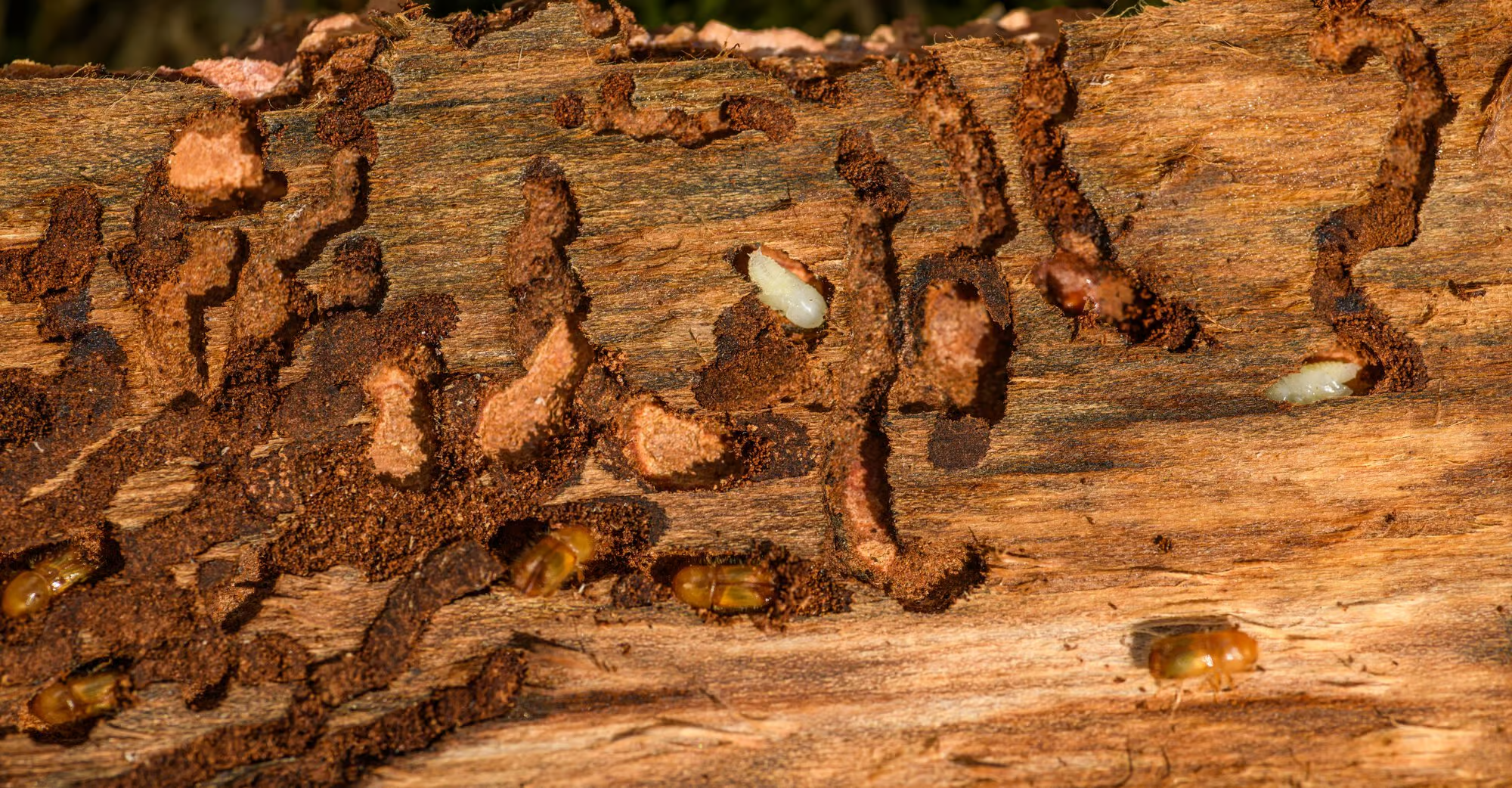
Outside, the places worth a close look include the foundation, exposed wood, porch supports, steps, and spots where soil or mulch touches wood. An inspector may look for mud tubes running up a foundation or support. Those narrow, dirt-like paths can be a sign of subterranean termites, but they don't tell the whole story on their own. A crack, an old tube, or a piece of worn wood needs a closer look before anyone calls it active termite damage.
Inside, the focus is on accessible wood and the areas around it. That can mean baseboards, door frames, window trim, and exposed framing in an attic or crawl space. Areas near plumbing are worth attention because leaks can leave wood damp. The point isn't to assume every soft board has termites. Water damage and other problems can look similar at first glance.
- Mud tubes can show a route termites used to travel, especially along a foundation or exposed support.
- Discarded wings near a window or door can be a clue that winged termites were present. Wings alone don't show where a colony is.
- Wood that looks hollow, blistered, or damaged deserves a closer look, but appearance alone may not show what caused it.
- Damp wood, leaks, and wood touching soil aren't proof of termites. They do help explain where an inspector should pay attention.
Access makes a difference. Stored boxes against a wall can hide trim. A locked crawl-space entry or attic hatch can keep an inspector from seeing exposed framing. Finished walls and flooring hide wood even when the room is clear. If you're getting a home ready for an inspection, make accessible areas easy to reach and point out any spot that concerns you. You don't need to guess what caused the mark. Saying where you noticed it is more useful.
That outside-to-inside look helps you understand what an inspection can answer. It can identify visible clues and places that need closer attention. It can't see through a wall or settle the cause of every stain. Knowing that difference helps you make sense of the findings without treating a clean-looking surface as proof that there's nothing behind it.
Pairing a termite inspection with a full home inspection makes sense for buyers
When buying a home in Abilene, a termite inspection and a pre-purchase home inspection answer different questions. One helps you understand whether there's visible evidence of termites. The other looks at the home's broader condition, including its structure and major systems. Pairing them gives you a better basis for deciding what to ask about before you buy. Neither one takes the place of the other.
Say a home inspector notes a plumbing leak and damage to a cabinet. That's useful information about a repair you may need to discuss. It doesn't, by itself, tell you whether termites caused any of the damage. In the same way, a termite finding doesn't tell you whether the plumbing, roof, or electrical system has a problem. Keeping those questions separate helps you avoid making a bigger claim than either inspection supports.
You don't have to wait for one inspection's results before deciding whether to request the other. If you want to understand both the home's general condition and possible termite activity, ask about both while you're planning your inspection period. Morgan Inspection Services performs the home inspection and schedules the termite inspection with its licensed partner. When you call, ask whether each can be scheduled in time for your decision deadline. Don't assume they'll produce one combined report.
Before you book, check what your contract and lender require, if anything, and ask what you'll receive for each service. You can also ask whether the inspections have separate fees. That keeps a scheduling question from turning into a surprise near closing. If someone has requested a particular termite document, confirm that request directly rather than assuming a general home inspection report will satisfy it.
Once you have the findings, you can decide which questions belong in the purchase discussion. A home condition issue may call for a repair estimate. A termite finding may call for more information about activity or damage. You don't need to settle every question yourself, but you do need enough time to raise it with the right person before your deadline passes.
If you already have a recent home inspection report, read it before ordering another one. Look at what was inspected, when it was done, and whether it answers your questions about this purchase. A termite inspection may still be worth considering because the two services cover different concerns. The useful choice isn't simply to order more inspections. It's to get the information you still need while you can act on it.
Thinking about a termite (WDI) inspection in Abilene? Let's talk.
Call (325) 998-4663 · report within 24 hours
Signs you need a termite inspection now, not later
A new sign matters most when you can't tell what caused it and you have a decision coming up. Mud tubes, discarded wings, and damaged wood are all reasons to ask questions, but none tells you by itself how much of the home is affected. For an Abilene purchase, the useful question is whether you can get those questions answered while you still have time to act on the findings.
Pay attention to where you found the sign and whether it's new to you. A few wings you noticed today near an interior window may raise a different question from damage a seller says was repaired years ago. That history is worth asking about, but it doesn't settle what you can see now. On the other hand, if you've found an old report and nothing appears to have changed, read what that report covered before assuming you need to start over.
More than one clue in the same area can make the question harder to set aside. Suppose you notice a dirt-like line at the foundation and damaged wood at the porch above it. You still can't tell from a glance whether the damage is current or what caused all of it. You can, though, give an inspector two exact locations to examine instead of asking a broad question about the whole house.
The deadline can matter as much as the sign. If a purchase contract or lender has set a date for termite documentation, waiting to sort out an uncertain mark may leave little time to review the report or ask follow-up questions. Even without a visible clue, that paperwork may be the reason to schedule. Check what document is required first; the section on real estate deadlines above explains why that detail matters.
If there's no transaction deadline and you haven't noticed a new concern, you don't need to call every worn board an emergency. Look at what you already know. Was the area previously checked? Do you have a report that identifies the location and its limits? A past all-clear for one accessible area won't answer a new question about another part of the home, but a stain you've already traced to a plumbing leak doesn't become a termite sign just because it's on wood.
When you contact Morgan Inspection Services about a termite inspection, tell us what you found, where you found it, and whether a contract or lender has given you a deadline. You don't need to name the cause before you call. A clear description of the concern helps you ask for the inspection that answers the question you have.
When a full termite inspection is not necessary yet
You may not need a full termite inspection yet if there's no new concern, no purchase deadline, and a recent report already answers your question. Start with what you know. An inspection is useful when it helps you make a decision, not simply because a piece of wood looks old.
If you have a report for the same home, check its date and the areas it covered. Then ask yourself whether anything has changed since that visit. A report that covered the porch last month may answer your question about a worn porch board if there's no new damage. It won't answer a question about a mark you found later in a different room. You don't need to order the same work again just to collect another copy of the same answer.
Sometimes the first job is to sort out a known problem. Say you found a damp cabinet under a leaking sink, and the stain appeared while the leak was active. Deal with the water problem and keep track of what you found. The stain alone doesn't establish termite activity. If the wood has damage you can't explain after the area is dry, that's a different question. You can decide then whether an inspection would help.
You can also take a closer look before assuming a worn spot needs a full inspection. Note its location and, if you can, compare it with an older photo. Is it the same chipped trim you've known about for years, or is there a change you can't account for? You don't need to pry into a wall or decide for yourself what caused damage. You're just checking whether you have a new question to answer.
If you're buying a home, pause before ordering an inspection that might duplicate one already arranged by someone else. Find out what's been scheduled and whether the existing report will be available in time for your decision. If it answers the termite question you have, you may not need another inspection. If it doesn't, you can make that choice with a clearer reason.
Waiting makes sense only while the facts stay the same. A new sign, an area the earlier report couldn't cover, or a document required for your purchase can change the decision. Until then, keep the report and your notes where you can find them. That gives you a starting point if something changes, without treating every old board in an Abilene home as a fresh termite problem.