
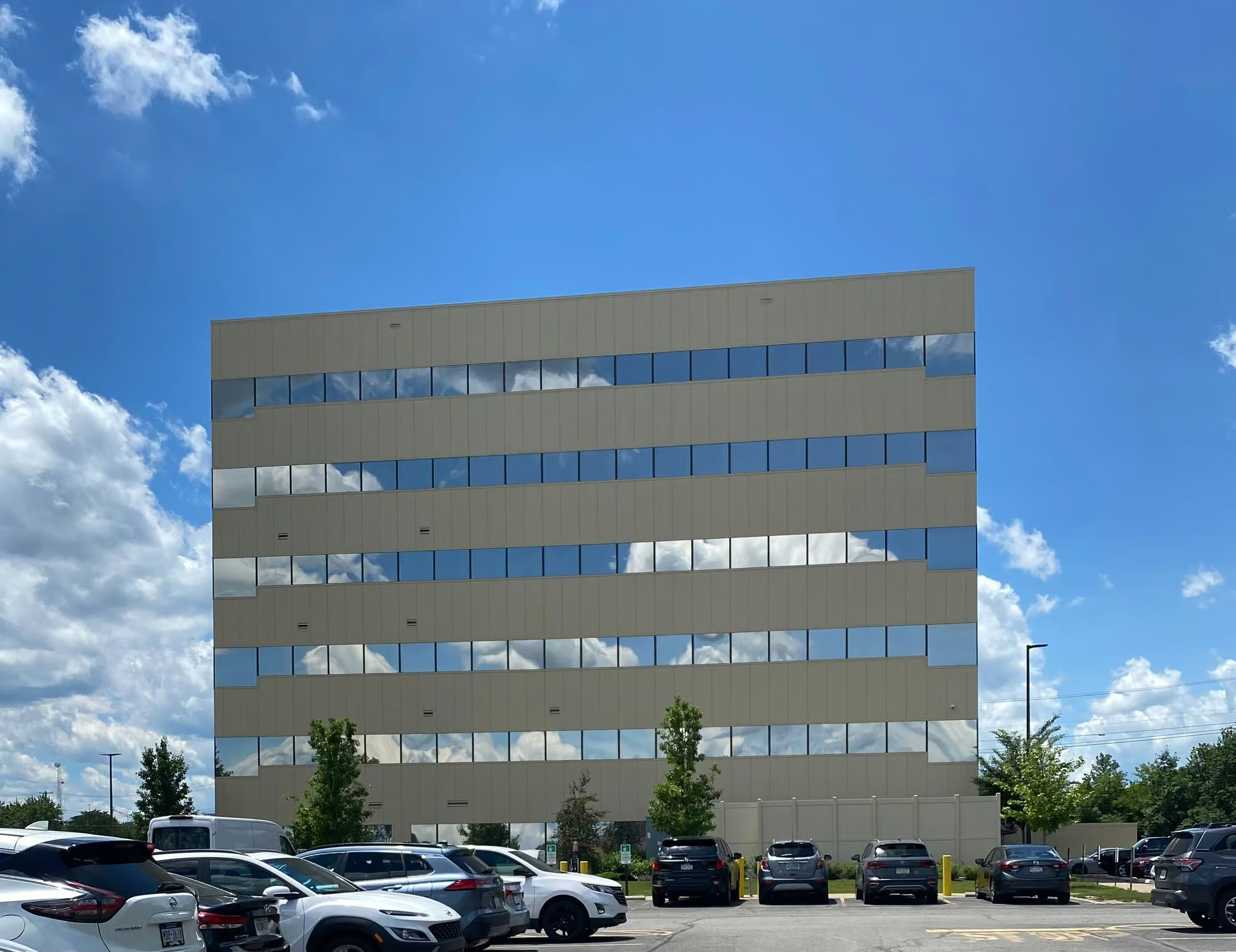
What an office building inspection covers
If you're buying a whole office building, you'll want to understand more than the rooms people work in. The roof, exterior, heating and cooling equipment, electrical equipment, plumbing, and areas around the building can all affect what it takes to own the property. If you're leasing one suite, the condition of that suite matters, but so does whether you can get information about shared systems that serve it. Those are different scopes, and it's worth settling that before the inspection.
A building inspection generally looks at conditions that can be seen and reached. Inside an office, that can mean looking at walls and ceilings for signs of water entry, checking doors and windows, and noting visible problems with fixtures or finishes. In the building systems, the concern is whether there's a visible problem that deserves a closer look, not whether someone can predict exactly how long a unit or component will last.
- Roof and exterior: visible wear, damaged surfaces, openings, and signs that water may be getting in.
- Heating, cooling, electrical, and plumbing: accessible equipment and visible conditions that may affect use or point to a repair need.
- Interior spaces: water stains, damaged finishes, doors that don't work as expected, and other observable defects.
- Grounds and access: visible drainage concerns, walking surfaces, entrances, and areas people use to reach the building.
Not every part of an office property will be open to an inspector. A locked equipment room, occupied suite, or roof without safe access changes what can be observed. If you're considering a lease, ask which areas the landlord will let you and the inspector enter, and find out who handles repairs to shared systems. That way, you won't mistake a look at your suite for a look at the entire building.
An inspection also isn't a permit review, a code-compliance certificate, or a specialist's engineering study. A water stain, for example, can tell you there's a question to answer; it can't, by itself, tell you what a concealed roof assembly needs. The value is knowing which visible conditions are straightforward and which ones call for more information before you decide what the office space is worth to you.
Why TREC's residential rules don't fully apply to office buildings
A TREC license tells you who the inspector is. It doesn't tell you everything that will be checked in an office building. TREC's residential inspection rules aren't a complete checklist for commercial property, so don't assume an office inspection will follow the same scope as a home inspection. Before you hire someone, ask what the office inspection will include and what it won't.
That matters because an office building can raise questions a home doesn't. You may need to know whether a fire alarm needs a separate test, whether an elevator has been serviced, or whether the space will work for your planned use. An inspection can help you spot concerns, but you shouldn't treat it as proof that those systems have passed a specialist's test or that your intended use has been approved. Those are different questions, and they may need different people or records to answer them.
Start with the decision you're making. If you're buying, tell the inspector what comes with the property and ask how the agreed scope will be described. If you're leasing, ask the landlord for the documents that show which repairs you'll be responsible for. Then ask the inspector which of those parts can be included. The point isn't to build the longest possible checklist. It's to avoid paying for an inspection that leaves out the very thing you needed to understand.
Before booking, it's fair to ask what you'll receive afterward, too. Will the findings distinguish an observed problem from a question that needs further evaluation? If a concern calls for a roofer, electrician, or other specialist, will that be clear in the findings? You also need to know which items aren't part of the agreed inspection, so you can arrange any other review before your purchase or lease decision is due. A clear scope helps you use the findings without expecting one inspection to settle every question about the building.
Mike Morgan holds TREC license #6231 and was appointed to the Texas Real Estate Commission's Inspector Advisory Committee in 2019. Those are useful facts when you're deciding whom to call. They aren't a substitute for asking what your particular office property needs. Bring the property details and your main concerns to that conversation, and make sure the scope matches the decision in front of you.
Credentials that matter for a commercial property decision
Credentials matter, but they answer a narrower question than you might think. They tell you about the person you're hiring. They don't turn an office building inspection into an engineering study or a sign-off on every system in the building. For your decision, look at both the inspector's background and the limits of what that background qualifies them to tell you.
Mike Morgan has a chemical engineering degree from Texas Tech University. Before he became an inspector, he spent five years as an officer on two U.S. Navy submarines, including the USS Florida. Those are parts of his technical background, and you should know them when you're deciding whom to call. They aren't a structural engineering license or a qualification to certify an office building's fire protection equipment. We'd rather be clear about that than have you rely on an inspection for an answer it can't give.
Mike has inspected full-time since 2002, and office building inspection is one of the services we offer. His TREC license is #6231. He was also appointed to the Texas Real Estate Commission's Inspector Advisory Committee in 2019. That work concerned rules and educational materials for the inspection industry. It tells you something about his experience with inspection standards, but it doesn't mean the committee reviewed the building you're considering or approved its condition.
So how do you put credentials to work? Start with the question that could change your choice. If a seller says a rooftop unit is in good shape, you may want more than a look at its visible condition before you take on its repair costs. If a tenant's plans depend on changing the layout, an inspection won't establish that the work can be approved. You can use the inspection to understand what you can observe now, then decide whether you need equipment records, a contractor's evaluation, or an answer from the authority that handles your planned use.
The same distinction helps when you're comparing inspectors. A long résumé isn't much use if you assume it covers a question that calls for someone else's expertise. Tell the person you're considering what decision rests on the inspection, and listen for a clear answer about what they can and can't determine. You should come away knowing whose judgment you're relying on, and where you'll need another answer before you commit to the property.
Thinking about an office building inspection in Abilene? Let's talk.
Call (325) 998-4663 · report within 24 hours
When office building inspection is the right service, and when it isn't
An office building inspection makes sense when the building's present condition could change your decision. If you're buying an office property in Abilene, you may be weighing repairs against the price and the work you hope to do there. If you're leasing, you may need to know whether a problem in the space could affect your plans. In either case, the inspection is useful when you can point to a decision it will help you make, not just a desire to have someone look around.
Say you're considering a small office with a stain above the reception desk. You don't know whether it's old damage or a sign of an active problem. That's a reasonable reason to ask for an inspection: you need a clearer picture of what can be observed before you decide what else to investigate. The same goes for an owner who wants to understand visible concerns before deciding which repairs to plan. You don't need to have found a defect first, but you do need to know what question you're trying to answer.
There are times when this isn't the right service. If you already know that one piece of equipment has failed and you need a repair plan, go to a qualified contractor for that equipment. An inspection won't replace a repair estimate. If the only question is whether you may legally use a space for your business, get an answer from the office that handles that decision. And if you need a specialist to determine the cause of a structural concern, ask for that evaluation rather than expecting a general inspection to settle it.
You may not need an inspection at all if you're leasing a suite that's already in use, you're comfortable with its condition, and your decision doesn't depend on learning more about the property. You can review the lease and available maintenance records yourself. That won't tell you everything about the building, but paying for an inspection won't be useful if its findings couldn't change what you do.
The harder case is when you want an inspection but can't get access to the part you're worried about. Don't assume the inspection will answer that concern anyway. First, find out whether access can be arranged or whether records or a specialist's review would answer your question better. The right choice is the one that gives you information you can use for this property decision.
How commercial inspection pricing works
There isn't one standard price for an office building inspection. The cost depends on how much property needs to be inspected, how easy it is to reach, and what you need the inspection to cover. That's why a price means more when it comes with a clear description of the work.
Commercial inspectors may quote a flat fee for an agreed scope, use the building's square footage as a starting point, or price the work based on the time and people it will take. A square-foot figure can be useful, but it doesn't tell the whole story. Two offices of the same size can take different amounts of work if one has several occupied suites or equipment that's hard to reach.
Say you're looking at a single office suite. You'll want a quote that reflects the space you can enter and the information you need for your lease decision. If you're buying the whole building, the quote needs to account for a much larger property decision. Don't compare those prices as though they buy the same inspection.
Before you accept a quote, ask for these points in plain terms:
- What property and areas does the quoted inspection cover?
- Does the price include a written report, and what will it describe?
- What access does the inspector need to do the quoted work?
- Are any requested specialist evaluations outside the price?
- If an area can't be entered, how will that affect the work or the charge?
It also helps to say what decision you're facing when you ask for a price. A buyer concerned about a building-wide expense needs different information from a tenant deciding whether one suite will work. Give the inspector the property size, the areas you expect to enter, and any concerns you've already noticed. If you don't know whether an equipment room or another part of the building will be available, say so. An estimate based on access you don't have may not answer the question you meant to ask.
The lowest number on its own won't tell you which quote is useful. Compare what each quote includes, what it leaves out, and whether the findings will help with your purchase or lease decision. If you'd like to discuss an office property, contact Morgan Inspection Services with the property details and the decision you're trying to make.