
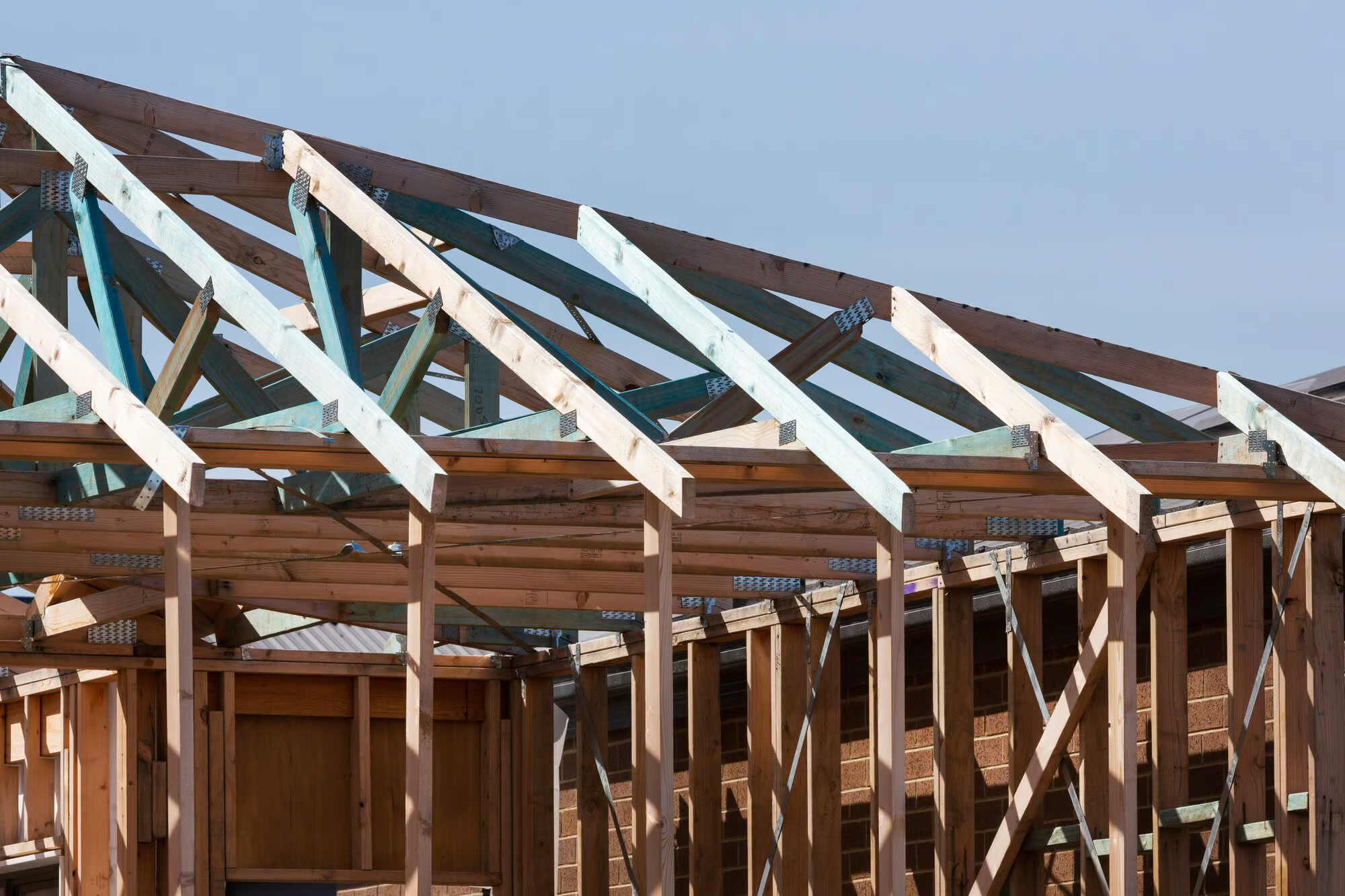
Why the pre-drywall window only opens once
Seeing that work while it's still exposed is the reason for a pre-drywall inspection. It isn't about finding every problem a house could ever have. It's about getting another set of eyes on the parts you can see now, while there's still a chance to ask questions about them without taking a wall apart.
Think about a wall where a pipe runs past the framing. Before drywall, you can see where that pipe travels and how it sits among the other work. After drywall, you might know where the sink comes out, but you can't see the route inside the wall. The same goes for much of the wiring and ductwork. A finished room can look neat while telling you very little about what's behind its surfaces.
The open walls also give you a clearer view of how different parts of the house fit together. An opening cut through framing, a crowded space around several runs, or a connection that looks unfinished may be easier to notice before the covering goes on. Not every unusual-looking detail is a defect. The value is being able to identify something worth asking about while it's still in plain sight, rather than guessing later.
This window has limits. Some work may already be covered or hard to reach, and other parts of the home may not be complete yet. An inspection at this stage can't tell you how every finished system will perform. It also doesn't take the place of the builder's work or any required inspections. What it can give you is a better-informed conversation about the visible work at a point when that conversation is especially useful.
You don't need to know how to read every pipe or wire to see why the timing matters. Once the drywall is up, you can still inspect the home, but you'll be looking at a different set of things. For an Abilene home that's still open at this stage, the choice is whether you want that closer look before those parts disappear from view. Mike Morgan, TREC #6231, has been a licensed home inspector since 2002.
What gets checked before the walls close up
A pre-drywall inspection looks at the work that's visible and accessible on the day of the inspection. The useful question isn't simply whether something looks unusual. It's whether there's a clear concern you can bring to the builder while the work is still open.
- Framing: Studs, joists, and other exposed supports can be checked for visible damage, gaps, and cuts or holes made for pipes and wires. A cut in a piece of framing may be worth a closer look, but its location and size matter. It isn't enough to call it a problem just because it looks different.
- Plumbing: Visible supply lines, drains, and vent pipes can be followed through the areas you can reach. That helps put a concern in a precise spot, such as a pipe passing through a floor or a connection near a fixture. It doesn't show whether every fixture will work once the house is finished.
- Electrical work: Cable runs, boxes, and other exposed parts can be viewed where they're installed. At this stage, the focus is on what can be seen, not on whether every switch or outlet works. Some of those parts may not be ready to operate yet.
- Heating and cooling: Exposed ducts and their connections can be viewed for visible damage or work that appears incomplete. You can also see where a duct has to fit around framing or other systems. That view doesn't tell you how evenly the finished home will heat or cool.
- Other exposed areas: Depending on the stage of the build, there may be accessible roof framing, window openings, or insulation to look at. If a part hasn't been installed, or is already covered, it can't be judged as though it's fully visible.
The details matter more than a long list of parts. Say you notice a cable and a pipe passing through the same tight space. The useful next step is to identify exactly where they are and what concern, if any, needs an answer. A photo and a room location make that conversation easier than saying, Something looked wrong in the walls.
You don't have to settle every technical question yourself. What you want from this stage is a clear account of the visible work: what appears sound, what needs a closer explanation, and what couldn't be assessed yet. That gives you something specific to discuss with your builder without treating every unfinished detail as a defect.
Why independence from the builder matters
Your builder has people checking the work as the house goes up. That's a good thing. But those checks answer the builder's questions: Is the work ready for the next trade? What needs to be finished before the schedule moves on? An inspection you arrange yourself answers a different question: What should you understand or ask about before the walls are closed?
You don't have to assume anyone has done something wrong to want that second view. The builder knows the plans, the crews, and the reasons behind decisions made on site. You may only see the house during an occasional visit. A separate inspector can help you turn a vague worry into a question about a particular spot, or tell you when a detail needs more information before anyone can judge it.
Say you're concerned about an opening in a piece of framing. You could tell the builder, That wall doesn't look right, and leave both of you guessing about what you mean. A more useful conversation identifies the location, describes the opening, and asks how it fits the plans or the intended repair. The builder may have a straightforward answer. If not, you've raised the question while the work can still be seen.
That distinction matters because an inspector isn't the builder's supervisor. An inspector can point out a visible concern and explain why it deserves an answer. The builder remains responsible for the construction, and some answers may need to come from the plans or the appropriate design or trade professional. You shouldn't be promised that a separate inspection will settle every disagreement or prove that every part of the house is right.
Mike Morgan has a chemical engineering degree and has been a licensed home inspector since 2002. He was also appointed to the Texas Real Estate Commission's Inspector Advisory Committee in 2019. Those are reasons to bring an informed perspective to the conversation, not reasons to skip asking the builder for an explanation. The most useful outcome is one you can follow: a specific concern, a clear response, and an understanding of what remains unresolved.
If your builder already welcomes your questions, an independent look can make those questions more precise. If communication has been difficult, it gives you a way to discuss the work itself rather than argue from a feeling that something might be wrong. Either way, the point isn't to catch someone out. It's to help you make sense of the home you're buying while you can still see the work in question.
Thinking about a pre-drywall inspection in Abilene? Let's talk.
Call (325) 998-4663 · report within 24 hours
Coordinating the inspection around your builder's schedule
Start with the person who gives you construction updates. Ask when the work inside the walls is expected to be ready to view and when drywall is expected to start. Those may be different days, and both dates can move. A date on the calendar isn't much help if the work you want inspected isn't there yet.
Next, ask how your builder handles access for an inspector you hire. Find out who approves the visit, how much notice they need, and whether someone must be there to let the inspector in. If your purchase agreement or builder paperwork addresses independent inspections, check it before making arrangements. You don't want to discover an access problem on the day of the visit.
When you contact an inspector, share what the builder has told you, not just your hoped-for date. Is the plumbing in place? Are the electrical runs finished? Has the builder given you a date for closing the walls? It's fine if you don't know every answer. Knowing which details are still uncertain makes it easier to discuss a useful time for the inspection instead of treating a tentative construction date as fixed.
Say the builder expects to start drywall on Friday but tells you some electrical work won't be finished until Thursday. An earlier visit might leave that work out of the picture; a later one might miss the open walls. That's a question to work through with the builder and inspector, not a reason to assume either date will work. The best opportunity depends on what's ready and what access the builder will allow.
Keep in touch as that window gets closer. Ask the builder to confirm whether the work is ready and whether the drywall plan has changed. If the schedule shifts, pass that information along promptly. You may need to change the inspection date rather than go ahead with a visit that can't answer the questions you had. Likewise, if part of the home has already been covered, tell the inspector so you can be clear about what will still be visible.
You don't have to manage the construction schedule. Your part is to get a reliable update, arrange permission to enter, and make sure everyone is talking about the same stage of work. That leaves the inspection focused on what you came to understand, rather than on a locked door or a wall that went up sooner than expected.
How pre-drywall fits into a full new-construction inspection sequence
You don't have to choose between a pre-drywall inspection and an inspection of the finished home. They answer different questions. The first helps you understand visible work before it's covered. The second lets you look at the home you'll move into. If you're deciding whether to arrange both, think about what you want to know at each stage, not how many inspections sounds like enough.
There can be an earlier opportunity, too. A foundation pre-pour inspection concerns work before concrete covers it. It can't tell you what will happen with walls, wiring, or finished rooms later. If that stage has passed, you can't make up for the lost view with an inspection at the next stage. You can still choose to look at the work that's open now.
After the walls close, the questions change. A finished-home inspection can address visible finishes and systems in a more complete state. A door that doesn't latch, a fixture that doesn't work, or a room that doesn't cool as expected may only become apparent then. But a finished room won't show every route a pipe or cable took through the wall. That's why a good result at one stage doesn't prove there was nothing worth asking about at another.
Say you're buying a newly built home in Abilene and plan to have it inspected before you move in. That plan still makes sense. If the walls are open now, though, waiting for the finished inspection means giving up the chance to look at the work that will soon be hidden. On the other hand, if drywall is already installed throughout the home, calling a visit pre-drywall won't bring that view back. It's better to be clear about the stage the house is in and what an inspection can answer there.
You also don't need to treat every stage as a promise that the next one will go smoothly. Construction continues between inspections. Work may be added, changed, or completed later. Keep any questions you raise tied to the stage where they came up, and ask the builder how a concern was addressed. That gives you a way to follow the issue without assuming an earlier look can stand in for a later one.
The practical choice is whether you want an independent look at the open-wall stage in addition to the look you'll get when the house is finished. One doesn't cancel out the other. See how the phases fit together in our new construction inspection guide.