
Deciding whether you need a well system inspection
If you're buying a home with a private well, ask what you know about it. Has the seller shared records for the well, pump, or pressure tank? A faucet that runs during a showing tells you the system delivered water for those few minutes. It doesn't tell you much about the condition of the parts doing the work. An inspection can help you make the purchase decision with more than that brief glimpse.
The same question comes up if you already own the home and the water delivery has changed. Maybe pressure drops while you're using more than one fixture, or the pump seems to start and stop more than you remember. Those observations don't identify the cause on their own. They do give you a clear reason to learn more about the system instead of guessing which part might be at fault. Tell the inspector what you've noticed so you can ask whether the inspection's scope addresses it.
It helps to separate two questions that sound alike: Is the well system working as expected, and what's in the water? The first is about equipment and water delivery. The second calls for water testing. Don't assume a well system inspection includes a lab test or answers every question about water quality. If both matter to your decision, ask what each service covers before you book.
You may not need this inspection if the property uses a public water supply and has no private well to evaluate. You may also have enough information if you already have a recent inspection that covers the system and nothing has changed since then. Read what that earlier work included rather than relying on its title alone. A record about the water itself, for example, won't necessarily tell you about the pump or pressure tank.
Morgan Inspection Services offers well system inspection, and Mike Morgan holds TREC license #6231. Before booking, tell us whether you're buying the property or trying to understand a problem at a home you own. Ask which parts of the system the inspection covers and whether your specific question fits that scope. That's the simplest way to decide whether this is the inspection you need.
What a well system inspection covers, and what it doesn't
A well system inspection is about how the private well supplies water to the home. The useful question isn't just, "Does the faucet run?" It's whether the visible equipment and the way the system delivers water raise concerns you should understand before you make a decision. The exact checks can vary, so it's worth asking what's included rather than assuming every inspection answers the same questions.
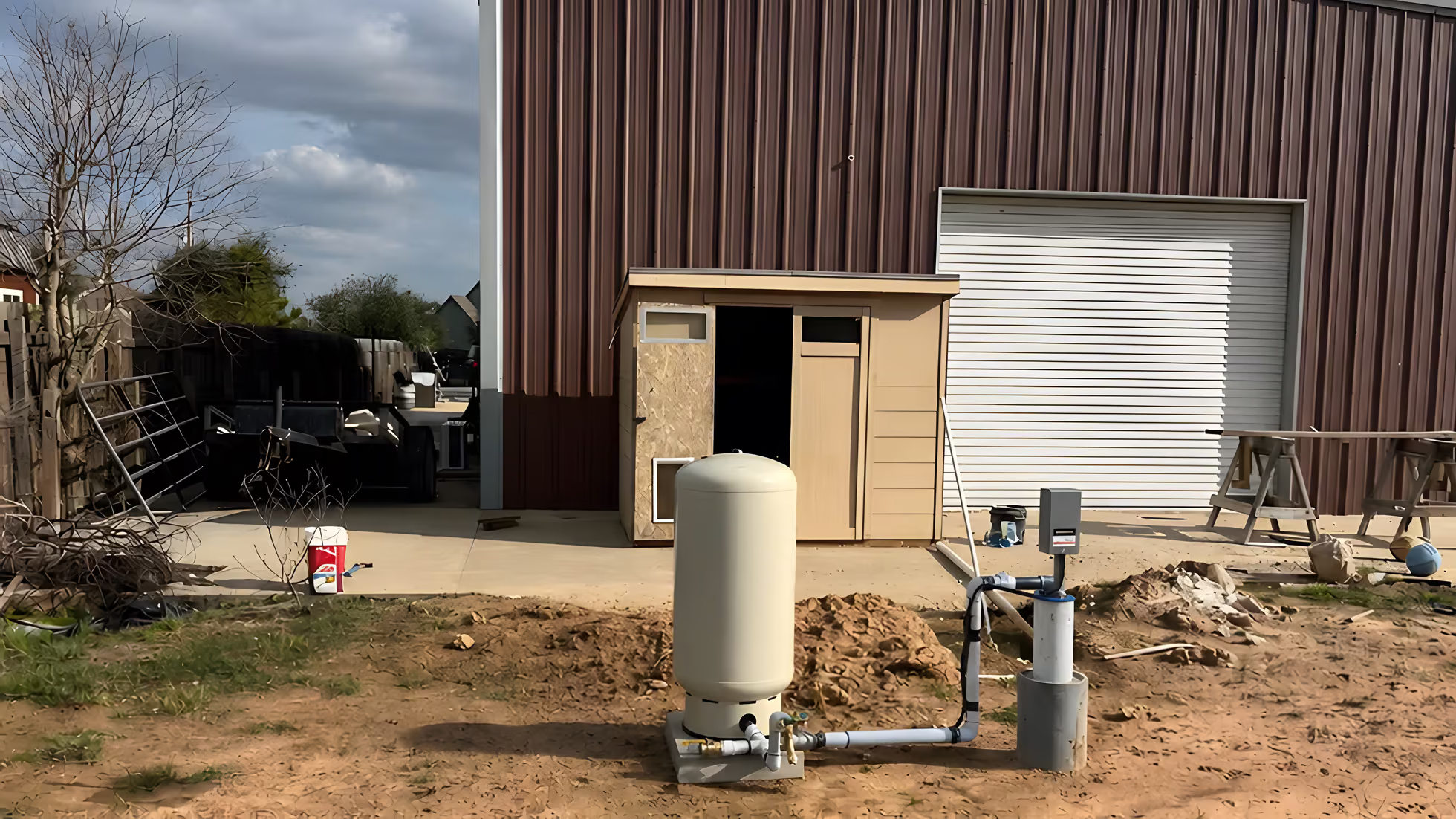
Think of the system in parts. The well is the water source. A pump moves the water. A pressure tank helps keep delivery steady as you use it. Controls, pipes, and fittings connect those pieces to the house. If you notice weak pressure, the symptom alone won't tell you which part is involved. Looking at the system gives you more useful information than guessing from the kitchen sink.
Before you book, ask whether the inspection includes the parts you can see at this property and any checks of water delivery that matter to you. You can ask specifically about the wellhead, pump-related equipment, pressure tank, and controls. If a component is buried, sealed, or otherwise out of view, ask how that limits what can be assessed. An inspection can't establish the condition of a hidden part simply because water came out of the tap.
It's also important to know what a short observation can't prove. Water running at a fixture doesn't show how much water the well can supply over a long period. A check of the equipment doesn't tell you the well's depth or the condition of everything below ground. Those may matter to a buyer, but they shouldn't be treated as answered unless the inspection's stated scope addresses them.
Water quality is a separate question. Clear water can still contain things you can't see, taste, or smell, and an equipment inspection isn't a substitute for a water test. Likewise, a water test tells you about the sample tested, not whether the pressure tank or pump is in good condition. If you're making a purchase decision, keep those two kinds of information separate.
The practical result you're looking for is a clearer picture of the system's observable condition and its limits, not a promise that every part will keep working. Tell us what you need to learn about the property, and ask which parts a well system inspection can address before you schedule it.
Scheduling a well inspection with your home inspection
If the home you're buying has a private well, bring it up when you schedule your pre-purchase home inspection. Morgan Inspection Services offers both that service and well system inspection. Ask whether both can be arranged for your property and what you need to do to schedule each one. Don't assume that booking the home inspection also books the well inspection.
Start with your contract dates. You need enough time to have the work done, read the findings, and decide whether you need more information before your inspection period ends. If that deadline is close, say so when you call. Also ask when you can expect the findings from each inspection. That's more useful than assuming you'll have everything back on the day of the visit.
The seller or listing agent may need to help with access. Ask them where the well and related equipment are, whether any part is behind a locked gate or door, and who can provide access. You can also ask the seller for any well records they have, such as past inspection notes or pump repair paperwork. You don't need a complete history to make the appointment, but records can help you understand what's already known.
Before you confirm, get clear answers to three scheduling questions:
- Can the well system inspection be scheduled with the pre-purchase home inspection, or will it need a separate appointment?
- Will you receive findings for each service, and when should you expect them?
- How is the well inspection priced when you schedule both services? Ask for the cost of each before you agree.
If access to the well equipment isn't available on the scheduled date, ask what that means for the inspection before your contract deadline passes. The same goes for records you're still waiting to receive. Don't let missing paperwork hold up the appointment without first asking whether it's needed. You can sort out those practical details while there's still room to make a decision.
When you contact Morgan Inspection Services, have the property address, your inspection deadline, and what you know about access ready. Ask to schedule the well system inspection alongside your pre-purchase home inspection so you know what's arranged before the deadline gets close.
Thinking about a water well inspection in Abilene? Let's talk.
Call (325) 998-4663 · report within 24 hours
Why credentials matter for inspecting a private well system
Credentials matter when you're deciding how much weight to give an inspector's findings. A private well system has several parts working together, and a symptom at the faucet may have more than one possible cause. You need someone who can explain what the evidence shows without turning a possibility into a diagnosis.
Mike Morgan holds TREC license #6231 and has worked full-time as a home inspector since 2002. He also has a degree in chemical engineering from Texas Tech University. Those are useful facts to know when you're choosing who will inspect the systems at a home. They don't, by themselves, tell you which well components are included in an appointment. That's a separate question to settle before you book.
In 2019, Mike was one of six home inspectors selected for the Texas Real Estate Commission's Inspector Advisory Committee. The committee helped write rules and educational materials for the home inspection industry. It's meaningful experience, but it isn't a claim that he can see every part of a well or answer every question about one. No credential removes the limits of what can be observed at a particular property.
Say you're buying an Abilene home with a private well, and the seller mentions that the pump was replaced. The useful follow-up isn't simply, "Is the inspector qualified?" Ask what information the inspection can give you about the system as it stands now. If you have paperwork for that repair, share it and ask how it relates to what can be inspected. A past repair record and an inspection answer different questions. Neither should stand in for the other.
It's also fair to ask how an inspector will describe a concern that can't be pinned to one cause. If water pressure seems uneven, you don't want a guess presented as a sure answer. You want to know what was observed, what remains uncertain, and whether that uncertainty matters to your decision. That distinction helps you decide if you need more information without treating every unanswered question as a failed inspection.
When you compare inspectors, look at both their background and the work you're asking them to do. Ask who will conduct the inspection, what they're qualified to assess, and how they'll explain findings that have more than one possible cause. For a private well, a careful explanation of uncertainty is often more valuable than a confident answer the evidence can't support.
What to ask before booking a well inspection
Before you book, start with the one thing you most need to know. Are you worried about a pressure drop, a pump that keeps starting, or whether the system can serve the home you're buying? Those aren't quite the same question. Tell us what you've noticed, then ask what the inspection can show about it. That conversation will help you avoid paying for an answer the inspection can't give.
- Will you take any pressure or flow readings, or observe how the system responds while water is running? If you have a concern that shows up only when two fixtures are in use, describe it. Ask whether the planned checks could show that behavior, and how long the system would be observed. A brief check may not reproduce an intermittent problem.
- How will you describe a concern if its cause isn't clear? Weak pressure might point to more than one part of the system. Ask whether the findings will separate what was observed from what might be causing it.
- What information will I receive after the inspection? Ask whether the findings will identify the equipment assessed, any conditions that couldn't be assessed, and concerns you should follow up on.
- If the inspection raises a question it can't settle, what kind of follow-up should I ask about? Ask what remains unknown and who would need to evaluate it. That isn't the same as assuming the inspection includes additional testing.
It also helps to describe when a problem happens, not just what you call it. "Low pressure" could mean a weak shower all the time, or a strong shower that slows when the washer starts. If you own the home, think about when you first noticed the change and whether it comes and goes. If you're buying, pass along what the seller has told you, but make clear what you haven't seen yourself.
You don't need to know the names of every part before you call. The point is to find out whether the planned inspection fits the decision in front of you and what you'll still need to learn afterward.