
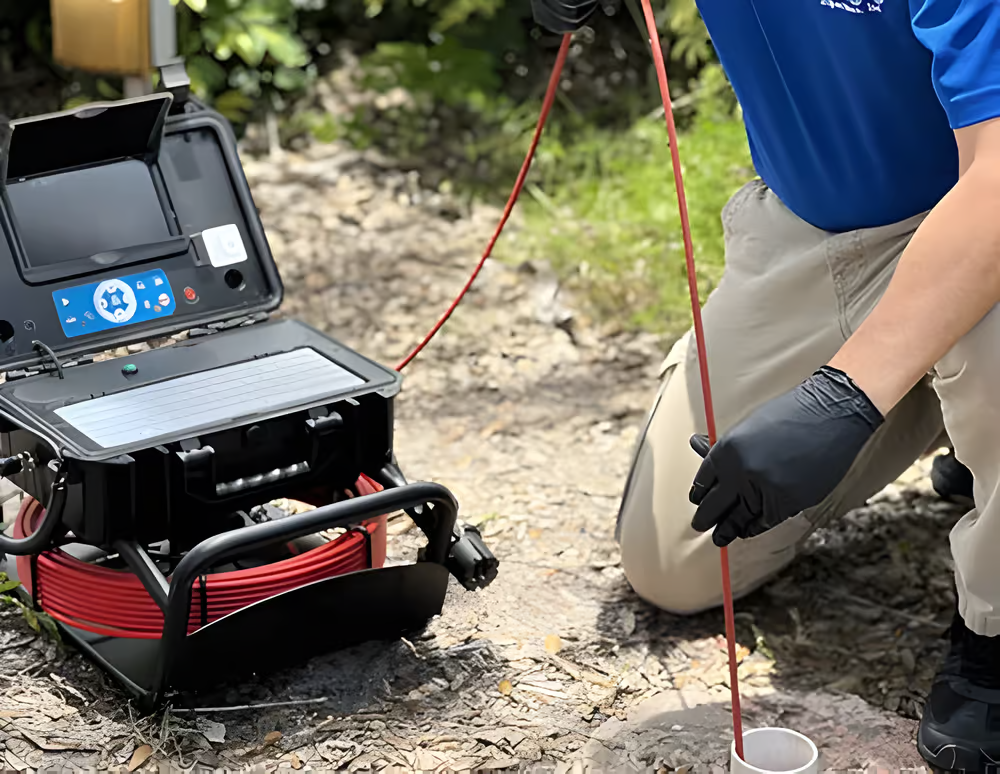
What a sewer line scope checks
A scope looks for visible damage, blockages, and changes in the pipe that could affect how waste flows. It shows the part of the line the camera can reach, not every hidden part of the plumbing system. If you're buying a home in Abilene, that gives you a way to make a decision with more than guesswork.
Think of it as looking down a tunnel with a small camera. The view can reveal a problem that's hard to spot from a toilet or sink, even when the fixtures seem to drain. It can also show where a concern appears along the accessible route. That matters because a spot near the house and one farther down the line are different things to ask about before you buy.
- Cracks or breaks: These can show that a section of pipe has been damaged, though the camera alone can't tell you what's happening in the soil around it.
- Roots or other obstructions: Material inside the line may narrow the path for wastewater. The view helps you tell a visible obstruction from a drain that simply emptied slowly during a short test.
- Offset joints: Where two pipe sections meet, one may sit out of line with the other. The camera can show the step at that joint and whether debris has collected there.
- Standing water or buildup: These can hide part of the pipe's surface. Water sitting in one spot is worth noting, but a camera view by itself doesn't measure the pipe's slope.
The limits matter as much as the findings. A camera can't see through a blockage, heavy buildup, or murky water. It can't inspect a section it can't enter, and a clear-looking view doesn't prove the pipe will never have trouble. A scope also looks inside the line; it doesn't show the condition of the surrounding soil or confirm that every connection outside the camera's view is sound.
So the useful question isn't just, "Did the line pass?" Ask what portion was visible and what, if anything, kept the camera from going farther. If a finding concerns you, ask where it appears and what you can see in the image. That gives you a clearer starting point for deciding whether you need more information before moving ahead.
Why a home inspection doesn't cover this
A home inspection can tell you useful things about the plumbing you can see and operate. It can't tell you what condition the buried sewer line is in. That's why, if the line matters to your buying decision, a sewer line scope is a separate question to ask, not something to assume the home inspection has answered.
Say you run the bathroom sink and it drains without trouble. That's good to know, but it only tells you how that fixture behaved during the test. The pipe that carries waste away from the house may be underground and out of sight. You can't judge its full condition from the sink, a toilet flush, or a look around the yard.
The reverse is true, too. A slow drain doesn't automatically tell you where the trouble is. It could involve that fixture or a part of the system farther along. A home inspection may give you a reason to ask more questions, but it won't turn an observation at a fixture into a diagnosis of the buried line. Keeping those two things separate helps you avoid treating a clue as an answer.
This matters most when you're buying a home in Abilene and still have time to decide what information you need. If a seller says the drains have worked fine, you can take that as their experience without treating it as a look inside the line. Likewise, if your home inspection doesn't flag a drain concern, that doesn't mean the buried pipe was checked. Neither point is a reason to panic. They just answer different questions.
Before you book, be clear about what you're asking for. If you want an assessment of the home's accessible systems, ask about a pre-purchase home inspection. If you also want to know about the line you can't see, ask for a sewer line scope specifically. Morgan Inspection Services offers both services, but one shouldn't be mistaken for the other or assumed to come with it. You can also ask what access is needed and what happens if part of the line can't be viewed, so you know the limits of the information you'll receive.
You don't have to order every inspection available to make a careful purchase. Start with the question that would change your decision. If learning about the buried line could affect what you ask the seller, what further help you seek, or whether you're comfortable moving ahead, a home inspection alone won't settle it.
Scoping the line without a repair agenda
If you're buying a home, you don't need a repair proposal before you know whether there's a problem to discuss. Start with the scope. Its value is in showing you what can be seen inside the line, where a concern appears, and what remains unknown. That's information you can use to decide what to ask next. It isn't, by itself, a reason to approve a repair.
Say the camera shows a joint that looks out of line. You'd want to understand where it is and whether the view shows anything else at that spot. You wouldn't want to jump from one image to a decision about digging up the yard. A repair recommendation involves questions a camera view alone can't settle, including what work is needed and what it would cost. Keeping those decisions separate gives you room to think.
Before you book a sewer line scope, ask what you'll receive afterward. Will you be able to review the images or video? Will the findings identify where a concern was seen and say if any part of the line couldn't be viewed? Those are fair questions for any provider. They help you judge the evidence for yourself and give you something specific to discuss with the seller or a repair professional if needed. Don't assume a particular recording or report is included without asking.
If someone later recommends work, ask them to connect that proposal to the finding. What part of the line would they work on? What problem would the work address? Is there anything they need to check before they can say the proposed work fits? A clear answer should help you understand the choice, not just leave you with a price and a sense that you must decide on the spot.
The same care applies when the view doesn't show an obvious concern. You can use that information in your purchase decision without treating it as a promise about the line's future. What matters is knowing what the scope showed and where its view stopped.
Mike Morgan is a home inspector with TREC license #6231. If you're weighing a home purchase in Abilene, call Morgan Inspection Services to ask about booking a sewer line scope before you make a decision about the buried line.
Thinking about a sewer line scope in Abilene? Let's talk.
Call (325) 998-4663 · report within 24 hours
Matching the inspection to your wastewater system
Before you book, find out where the home's wastewater goes. A home connected to a public sewer and a home with a septic system both have a pipe leaving the house, but they don't have the same system beyond it. That difference changes what you need inspected. If you're buying in Abilene and the listing isn't clear, ask the seller which system serves the property. You can also check with the local wastewater utility or review available property records rather than guessing from the yard.
For a sewer-connected home, the line from the house toward the public system is the part you're asking about when you request a sewer line scope. Tell the provider what you know about the connection and ask which portion they expect to view. Don't assume the scope will cover pipe beyond the property's connection or settle a question about who maintains a particular stretch. If that matters to your purchase, ask the utility or another appropriate party to clarify it.
For a home with a septic system, the pipe from the house to the tank is only one part of the picture. A camera view of that pipe won't tell you the condition of the tank or the area where wastewater leaves the system. Morgan Inspection Services also offers a separate septic system inspection. If the property has septic, ask about that inspection rather than booking a sewer line scope and expecting it to answer every septic question.
A cleanout or a pipe you can see outside doesn't tell you, by itself, whether the home connects to a sewer or a septic tank. If you're sorting out what to request, these are the useful questions:
- Where does the home's wastewater go: a public sewer connection or an on-site septic system?
- Which part of the pipe do I want information about, and is there known access to that part?
- If the home has septic, do I need information about the tank and the rest of the system as well as the pipe leading to it?
It's fine if you don't have every answer when you first call. Share what the seller or listing says, and ask which service fits the question you need answered. The important part is not to use "sewer line" as a catchall for everything that carries wastewater away. Name the system first, then choose the inspection that covers the part you need to understand.
Signs that call for a scope now
The clearest reason to consider a scope is a pattern you can't explain by one fixture alone. A slow bathroom sink tells you little about the buried line. Trouble showing up in several places, or a history of the same trouble coming back, raises a different question: what's happening farther along the route the drains share?
- Wastewater comes up in a tub or shower when another fixture runs. That doesn't identify the trouble spot, but it's more useful to note than a single slow drain. Write down which fixture was running and where the water appeared.
- Several fixtures drain poorly at the same time. Ask whether the trouble started together or whether each fixture has had its own separate problem. That distinction can help you describe the concern without guessing at its cause.
- The seller reports repeat clogs or past work on the line. Ask what happened, when it happened, and what part of the line was involved. An old invoice or other record may answer more than a general statement that the problem was fixed.
- You notice an unexplained sewage smell or a persistently wet patch outside. Neither proves a buried pipe is damaged. The smell may have another source, and wet ground can have several causes. They're still observations worth recording accurately rather than turning into a diagnosis.
Details matter here. If a toilet backed up once, find out whether it happened again and whether other drains acted up at the same time. If a seller mentions that the line was cleared, ask whether the trouble returned. You're trying to separate a one-time event from a pattern, not prove where a blockage sits from a conversation.
It's also possible to have no obvious warning sign. That doesn't tell you what the buried line looks like; it only tells you what you've observed at the fixtures. On the other hand, one isolated drain problem doesn't prove the main line needs attention. Those are different levels of uncertainty, and you can weigh them against what the seller can document.
If you're buying in Abilene, keep your questions tied to the property in front of you. Which drains were affected? Has the problem happened more than once? Is there a record of work on the buried line? Clear answers help you decide whether a scope would give you information you still need for the purchase, without treating every plumbing clue as a buried-pipe failure.