
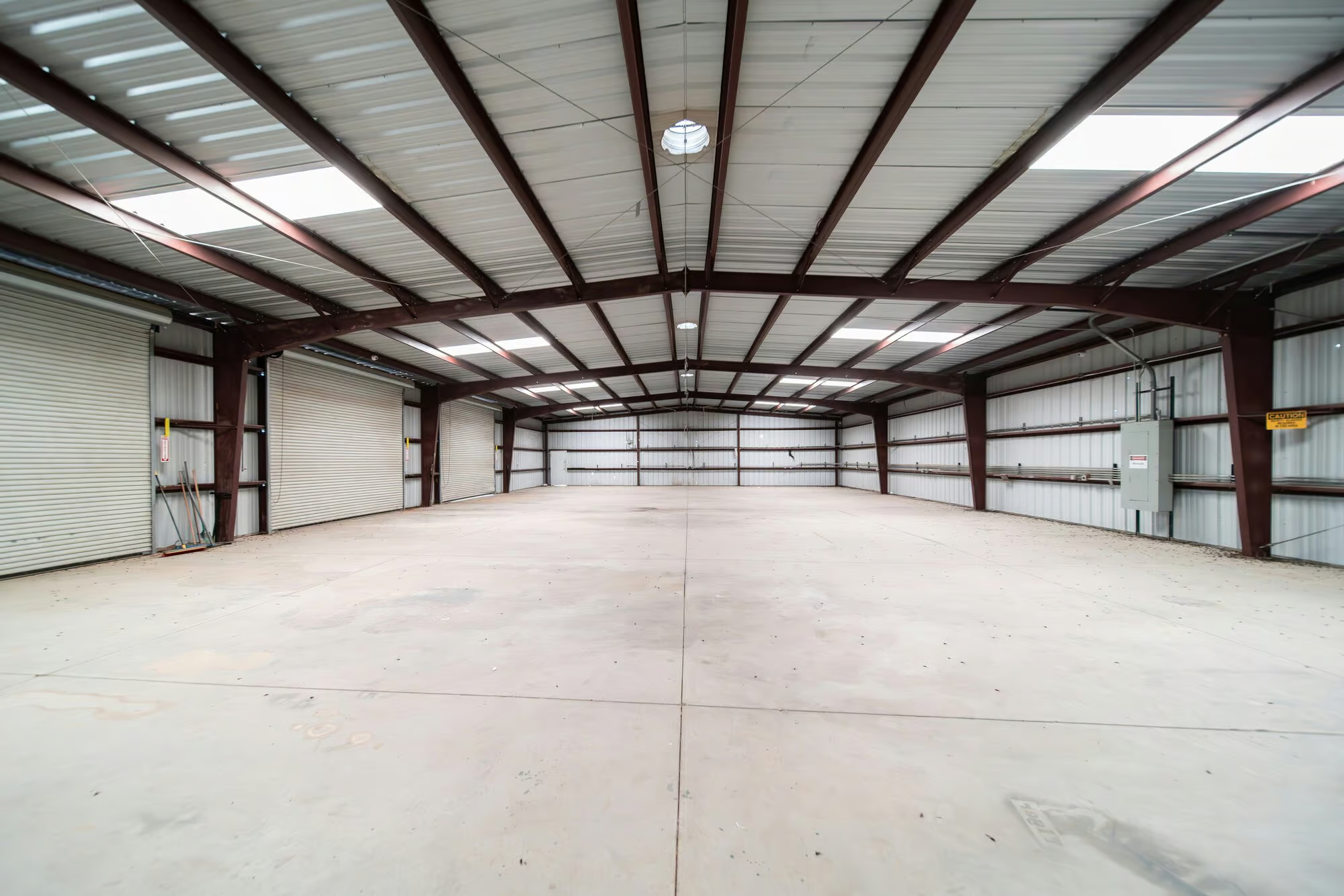
Warehouse inspection is a different job than a home inspection
If you're considering a warehouse in Abilene, start with your plans for the space. A building used for boxed inventory raises different questions than one used for heavy equipment. Both need a look at the building itself, but its intended use tells you which findings will matter most before you buy or sign a lease.
Take the floor. In a house, you might notice a crack because it affects a room's finish. In a warehouse, that same kind of crack can also raise questions about moving loaded equipment across the slab or placing storage racks there. An inspector can describe visible conditions, but a crack alone doesn't tell you the floor's load capacity or why it moved. Those are different questions, and they may need an engineer.
The roof is another good example. A stain on a bedroom ceiling is fairly easy to spot. In a warehouse, a roof leak may show up far from where water enters, above a wide open area or over goods you can't afford to get wet. The inspection can help you understand visible signs of damage or past leaks. It can't tell you that every part of a roof hidden from view is sound.
Then there's the equipment that makes the space useful. Loading doors, electrical service, heating and cooling, and plumbing may all matter, but not equally to every tenant. You might need reliable climate control for stored goods; someone else may care more about dock access. A sound decision starts with knowing what the building has, what condition is visible, and what your operation requires. That's more useful than a long list of items that don't affect your plans.
It's also worth separating a condition inspection from approval for a particular use. An inspection shouldn't be taken as proof that a rack layout can carry a planned load, a fire protection system meets your needs, or a change of use will be approved. Those questions call for the right specialist or authority. Knowing where a general inspection ends helps you get the answers you need without mistaking an observation for an engineering finding or an approval.
Morgan Inspection Services offers warehouse inspections. Mike Morgan holds TREC license #6231 and has a chemical engineering degree. When you contact us, tell us what you'll use the Abilene warehouse for and what concerns you already have. That gives us a clear starting point for discussing the inspection you need, rather than assuming a warehouse works like a very large house.
A chemical engineering background helps evaluate industrial systems
Mike Morgan has a chemical engineering degree from Texas Tech University. That background is useful when you're trying to understand how the parts of a warehouse work together. It doesn't make a condition inspection an engineering study, and it doesn't tell you whether the building can support a new operation. It does help frame the questions that matter before you commit to a space.
Say you plan to bring in machinery. Seeing electrical panels and outlets tells you something about what's there, but it won't tell you whether the service can handle your equipment when everything runs at once. Bring the equipment requirements and any available electrical records to the conversation. A visible concern may give you a reason to ask more questions; a qualified electrical professional may need to answer the capacity question.
Air and water raise similar questions. If your goods need steady temperature or low humidity, the mere presence of heating and cooling equipment isn't enough to settle the matter. A damp spot might point to a roof issue, plumbing, or condensation. Those possibilities call for different next steps. You don't have to know the cause before an inspection, but you should explain what you plan to store and where you've noticed moisture.
Changes made for a previous occupant deserve a close look, too. A partition can change how air moves through the space. Added equipment can change what the electrical system must supply. A capped pipe or an unused drain may leave you wondering what once operated there. Those observations don't prove that a change was done incorrectly. They do help you identify records to request and questions to put to the seller or landlord.
For an Abilene warehouse, the practical goal is to leave with a clearer picture of the building you can see and a shorter list of unknowns you still need to resolve. Tell us about the equipment, storage needs, and alterations you're considering when you contact Morgan Inspection Services. That context helps us discuss whether a warehouse inspection fits your decision and which questions you'll need to take to a specialist.
State-level credentials back up the findings in the report
Credentials matter most when they help you understand a finding without making it sound more certain than it is. Mike Morgan holds TREC license #6231. In 2019, he was one of six home inspectors selected for the Texas Real Estate Commission's Inspector Advisory Committee, where he helped write rules and educational materials for the home inspection industry. That's meaningful experience with the care needed to describe a condition clearly. It isn't a certification that a warehouse is ready for any use you have in mind.
When you're reviewing findings on an Abilene warehouse, separate three things: what was visible, what it might mean for your plans, and what still needs an answer. Suppose a loading door sticks. That's a condition you can understand and discuss with the seller or landlord. It doesn't, by itself, tell you whether the door needs an adjustment, a new part, or work on the opening around it. The difference matters if your business depends on that door every morning.
A useful report gives you something more practical than a pile of alarming words. As you read any warehouse inspection report, ask whether you can tell where a concern is, what the inspector could observe, and what question remains open. If a finding isn't clear, ask for an explanation in plain language. You shouldn't have to guess whether a note describes visible wear, a concern worth investigating, or a conclusion that requires someone with a different specialty.
Your next step depends on the decision in front of you. A buyer may need more information before committing to repairs. A tenant may need to know who'll address a condition before moving in. Neither should treat an inspection finding as a repair bid or proof that a planned operation will work. Share the concern with the person responsible for the property, and get the right specialist's answer when the question goes beyond observed condition.
Before booking, tell us whether you're buying or leasing and which parts of the warehouse matter most to your work. Ask what the inspection will cover and what you'll receive afterward. That conversation helps you decide whether the proposed inspection will answer the condition questions you have, and where you'll need separate answers before you commit.
Thinking about a warehouse inspection in Abilene? Let's talk.
Call (325) 998-4663 · report within 24 hours
When to schedule a warehouse inspection around a contract deadline
Start with the date in your own contract, not the day you hope to move in. Look for the last day you can inspect the property, raise a concern, or make a decision based on what you learn. Those dates may differ. If the wording isn't clear, ask your real estate agent or attorney what applies to your agreement. An inspection is most useful while you still have time to act on its findings.
Don't aim for the last available day. You may need time to read the findings, ask the seller or landlord for records, and arrange a separate evaluation if a concern calls for one. Finding out about a problem at the deadline leaves little room to understand what it means for your plans. Booking earlier won't answer every question, but it gives you a better chance to ask the next one before you commit.
Before you call, put three dates in front of you: when you can first enter the building, when your contract decision is due, and when you need to take possession. Then check who can provide access. A warehouse may have locked electrical rooms, occupied storage areas, or equipment that belongs to a tenant. If a space can't be entered, you may be left with an important unknown. It's better to sort out access before the appointment than discover a locked door while the clock is running.
Suppose your contract gives you time to review the property, but the current occupant can only make it available near the end of that period. Tell the person handling the transaction right away. They can help you work out access and discuss the contract timing with the other party. Don't assume an inspection appointment changes a deadline. Only the people involved in the agreement can address that.
When you contact an inspector, have the property address, approximate building size, deadline, and any known access limits ready. Say whether someone is still using the warehouse and whether documents such as roof or repair records are available. Those details help you have a useful scheduling conversation without assuming every area will be open or that every question can be settled in one visit.
If the deadline is close, be direct about it. Ask whether an appointment is available in time for you to review the findings, and check what you'll receive and when. If there isn't enough time, that's something to resolve before relying on an inspection to guide your decision.
What drives the cost of a commercial building inspection
The cost of a warehouse inspection depends on the work you're asking an inspector to do, not just the building's square footage. A small warehouse with several additions and hard-to-reach areas may take more work to assess than a larger, open building. Before you compare estimates, make sure each one covers the same property and the same parts of it.
Inspectors may price commercial work as a flat fee for a defined scope, by square footage, or by time. None of those methods tells you much on its own. Ask what the proposed fee includes and what would require a separate agreement. If you're looking at a site with two warehouses, an office area, and a detached storage building, don't assume a quote for the main warehouse includes all three.
The building's layout matters, too. Mezzanines, multiple roof sections, and spaces filled with stored goods can change how much can be seen and how much ground there is to cover. If you're leasing only one part of a building, say so. You'll still need to explain which shared areas or building systems matter to your decision, then ask what the proposed inspection would include.
Access is worth sorting out before you accept an estimate. Let the inspector know about locked rooms, occupied areas, or parts of the property that won't be available. Limited access doesn't necessarily make the job cheaper. It may simply leave you with less information. If access could change, ask how the scope and fee would be handled rather than guessing.
When you compare proposals for an Abilene warehouse, check these points side by side:
- Which buildings and areas are included?
- What will you receive after the inspection, and is that included in the fee?
- Are there known access limits that would leave part of your question unanswered?
- Would any separate specialist evaluation be outside this inspection and its price?
That last question can make a real difference to your budget. If you need a specialist to answer a question beyond the building's observed condition, get a separate scope and price for that work. Don't treat a general inspection estimate as the total cost of every answer you might need before buying or leasing.