
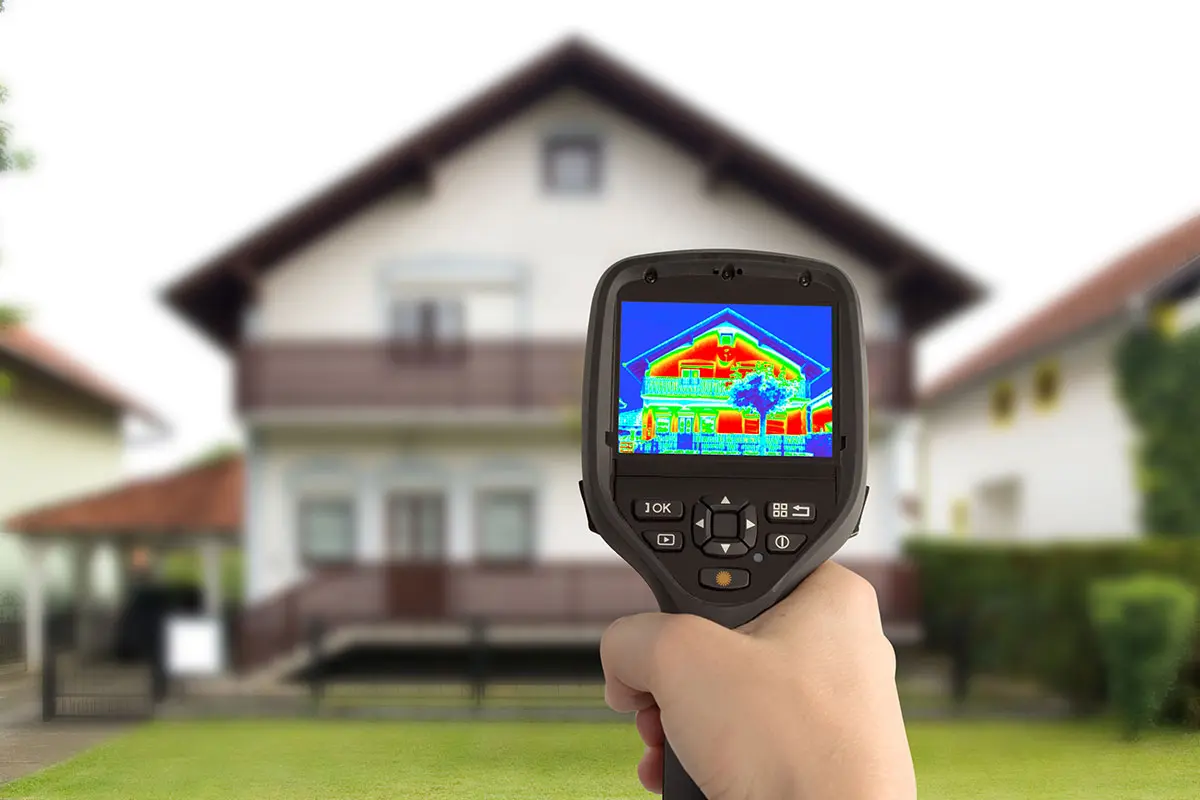
Is thermal imaging part of your inspection?
If you're buying a home in Abilene, it's fair to ask what a thermal image adds. An infrared image shows differences in surface temperature. That can help an inspector notice an area that looks different from the surrounding material, even when the painted surface looks the same to you. The useful part isn't the color on the image by itself. It's looking at that difference alongside what else can be observed in the home.
Say you notice a patch on a ceiling but can't tell whether it's an old repair or a current concern. A temperature difference there might be worth examining, but it won't tell you when the patch formed or what's behind the drywall. A cool area could have more than one explanation. A normal-looking image can't rule out a hidden problem, either. That's why a thermal image shouldn't be treated as a yes-or-no test.
Every home inspection we do includes a quick, general thermal scan. For a more detailed, thorough scan, there's a separate thermal imaging inspection with its own charge. The quick scan may not address the particular spot that's bothering you.
- Tell us when you book if you want the detailed thermal imaging inspection, not just the quick scan.
- Describe the area you're concerned about, such as a ceiling stain or a room that feels different from the next one. Ask whether the planned scope will address it.
- Ask how any temperature difference will be interpreted and what the inspection can, and can't, tell you about its cause.
Those answers matter more than the image alone. If your concern is broad, such as wanting another way to look at visible parts of a home before you buy, the quick scan that comes with every home inspection may be enough. If you need to know exactly what caused a stain or what's happening inside a closed wall, thermal imaging by itself can't give you that certainty. Knowing the distinction helps you choose the right inspection and understand what you'll learn from it.
What a thermal scan can and can't show
The main thing a thermal scan can show is where one surface has a different temperature from the area around it. That gives you a place to pay attention, not a picture of the pipes, wiring, or framing behind the surface. Think of it as a clue that needs context. What room is it in? What's on the other side of that wall? Was the heating or cooling running? Those details can change what the image means.
Say one part of an exterior wall looks cooler than the rest. Missing or uneven insulation is one possible explanation. Air moving through a gap is another. The image alone can't tell you which one you're looking at. It also can't tell you how large a gap might be behind the wall. You'd want the pattern considered alongside the wall's location and anything else you can observe.
A warm area near plumbing can raise a different question. It might relate to a hot-water line, but warmth by itself doesn't mean there's a leak. Likewise, a cooler patch doesn't prove that a surface is wet. Temperature and moisture aren't the same measurement. A scan may help narrow down where a concern is, but it can't establish whether water is present, where it came from, or whether the problem is still active.
The conditions at the time matter, too. Sunlight can warm one side of a house. A heating or cooling system can change the temperature of nearby surfaces. Different materials can look different even when nothing's wrong, and shiny surfaces can reflect heat from elsewhere. Those effects are part of why a bright spot on a screen shouldn't be treated as a finding all by itself.
There are limits to what can be seen at all. A scan reads surfaces it can view. It can't see through a cabinet, furniture, or a finished wall. It won't map every hidden part of a home, and it can't promise that a problem will produce a clear temperature difference on the day of the inspection. That matters if you're trying to settle a very specific concern before you buy.
The best question isn't, "Will the scan find everything?" It won't. Ask whether a temperature pattern could help you make sense of the particular area you're worried about. If it can, the image may give you a more focused question about that spot. If you need proof of what's inside a closed wall, you'll need more than an image to get there.
Why Abilene homes often benefit from a scan
Mike Morgan has inspected homes in the Abilene area since 2002. That's a reason to bring him your question about a particular home, but it isn't a reason to assume every Abilene house needs the same scan. What matters is the home in front of you and what you're trying to learn before you make a decision.
A scan may be useful when part of a home gives you reason to pause, but nothing you can see settles the question. Maybe a converted room feels different from the rest of the house. Maybe you're looking at an addition and want to know whether an area deserves a closer look before you buy. Those are more useful starting points than asking for images of every surface just because the option exists.
It also helps to think about what you'd do with the answer. If a scan points to an area worth checking, would that affect your decision about the home or the questions you ask next? If so, tell the inspector what you've noticed and where. If you're simply hoping for a picture that says the whole house is clear, the scan won't give you that. The value is in narrowing a real question, not collecting more images.
The same approach works if you already know the house has been changed over time. A finished space may look neat while leaving you unsure how it compares with the rooms around it. You don't need to guess at a hidden defect to ask about that difference. You can point out the space, explain what concerns you, and find out whether thermal imaging is likely to help with that question.
Before you schedule, be specific about both the area and the decision you're facing. A question about one room isn't the same as a request for a broad look at a home. Ask whether the available scan covers the place you care about and how its findings would be put in context. That gives you a better basis for choosing the right scope than the word "thermal" on a service list.
There's no special rule that makes a scan useful just because a home is in Abilene. It's useful when you have a question that surface temperature differences might help you investigate. Start with that question. It'll help you decide whether to include thermal imaging in the inspection you're considering or ask about it separately.
Thinking about a thermal imaging in Abilene? Let's talk.
Call (325) 998-4663 · report within 24 hours
Signs a scan is worth scheduling now
A scan is worth discussing when you can point to a particular spot and say why it matters to your decision. You don't need to know what's wrong. In fact, that's the reason to ask. The useful question is whether looking at that spot might help you decide what to ask next before you move forward with a home.
- A baseboard looks swollen or the paint keeps peeling in one small area. You can show exactly where the change is, but you can't tell from its appearance alone whether there's a current problem.
- One section of floor feels noticeably different underfoot from the floor beside it. You want to know whether there's a distinct area to examine, rather than relying only on how it feels.
- A wall near a window has a visible change, such as a patch of damaged paint, and you're unsure how far the concern extends beyond what you can see.
The timing matters most when you still have a decision to make. If you're considering a home purchase, raise the concern while you can still use what you learn to ask questions about that home. Waiting until after you've decided may leave you with the same question, but less use for the answer. Tell us where the spot is and what caught your eye. A close description is more helpful than saying you want the whole house scanned.
Try to separate what you've seen from what you suspect. "The paint is peeling along this baseboard" gives an inspector something to look at. "There's a leak in this wall" jumps to a conclusion you don't yet have. If you have a photo, note where you took it so you can identify the same spot later. If you've noticed a change since an earlier visit to the home, say what changed. Those details help make your question clear.
Before scheduling, name the area that concerns you and ask whether the inspection you're considering can address that spot. If it can't, you'll know that before you rely on the scan to help with your decision. You don't need a theory about the cause. You need a clear question about the home, asked while the answer can still help you.
When a scan won't add new information
You don't need a thermal scan to tell you something you can already see clearly. If a pipe is exposed and dripping, an image won't make the leak more certain. The useful next question is what needs to be fixed, not whether a temperature difference appears nearby. The same goes for water you can watch entering around a window during rain. A scan might make an interesting picture, but it won't tell you how to make the repair.
It also won't answer questions that aren't about temperature patterns. If doors stick and you're worried the house has moved, a thermal image can't measure that movement or tell you why it happened. If you're concerned about a crack in a foundation, looking for a warm or cool area won't show whether the crack has changed over time. You'd be paying attention to the wrong kind of evidence.
Sometimes you have a concern but no useful place to scan. A high electric bill, by itself, doesn't tell you which wall or room to examine. An odor with no visible source is frustrating, but a thermal image can't identify what you're smelling. In either case, start with the question you need answered. Don't assume a scan will turn a broad concern into a clear cause.
A scan may add little when the area has already been opened and the condition is known. Say a wall is open and you can see that insulation is missing. An image of the finished surface wouldn't give you better proof of what you can see with your own eyes. Or perhaps someone has already found a broken pipe behind an access panel. Imaging won't tell you whether the proposed repair is the right one. Those are questions to settle with the person doing the work.
Ask yourself what you'd learn from a temperature pattern that you don't know now. If the answer wouldn't affect what you ask, whom you consult, or how you decide, you can skip the scan. That isn't giving up on the concern. It's choosing a way to get information that fits the question. Thermal imaging is useful when it can help narrow an uncertainty, not when it merely puts a color image beside an answer you already have.